Product Photostability Testing overview
Do you provide Product Photostability Testing?
How product photostability testing is carried out
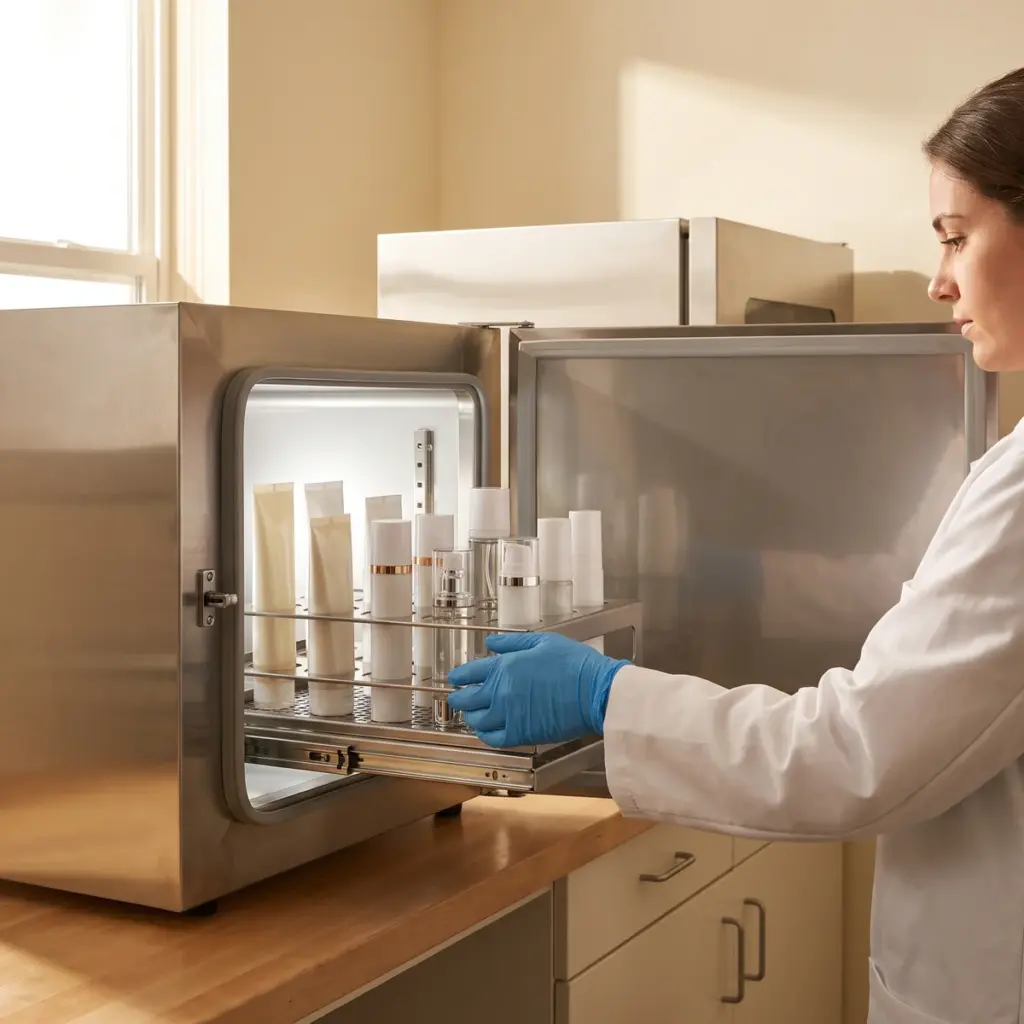
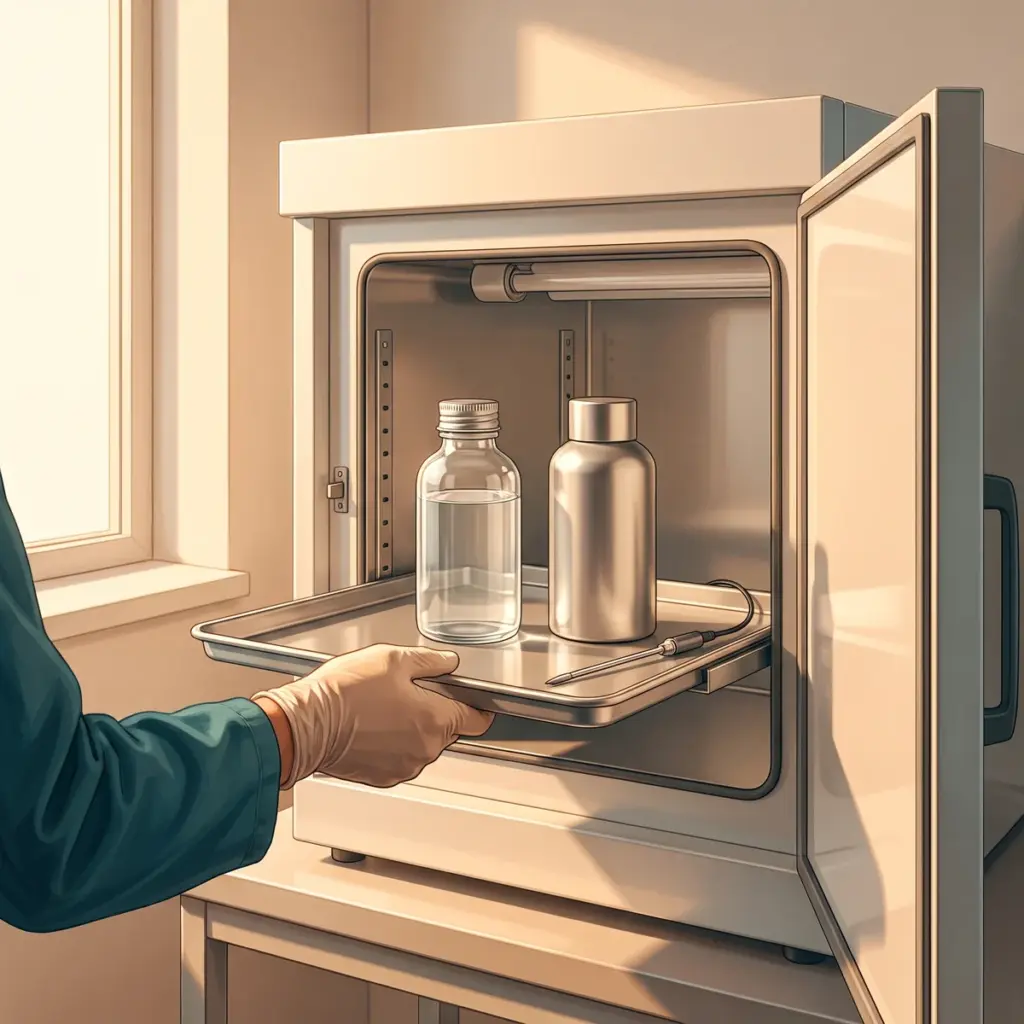
The laboratory first agrees what the study should represent: daylight through a shop window, retail display lighting or direct sun for a product used outdoors. That choice sets the light source, the filters and the total dose. Xenon arc lamps with daylight or window-glass filters are the most common sources. The cabinet logs irradiance and controls temperature, so the effect of light can be separated from the effect of heat.
Exposed samples and dark controls
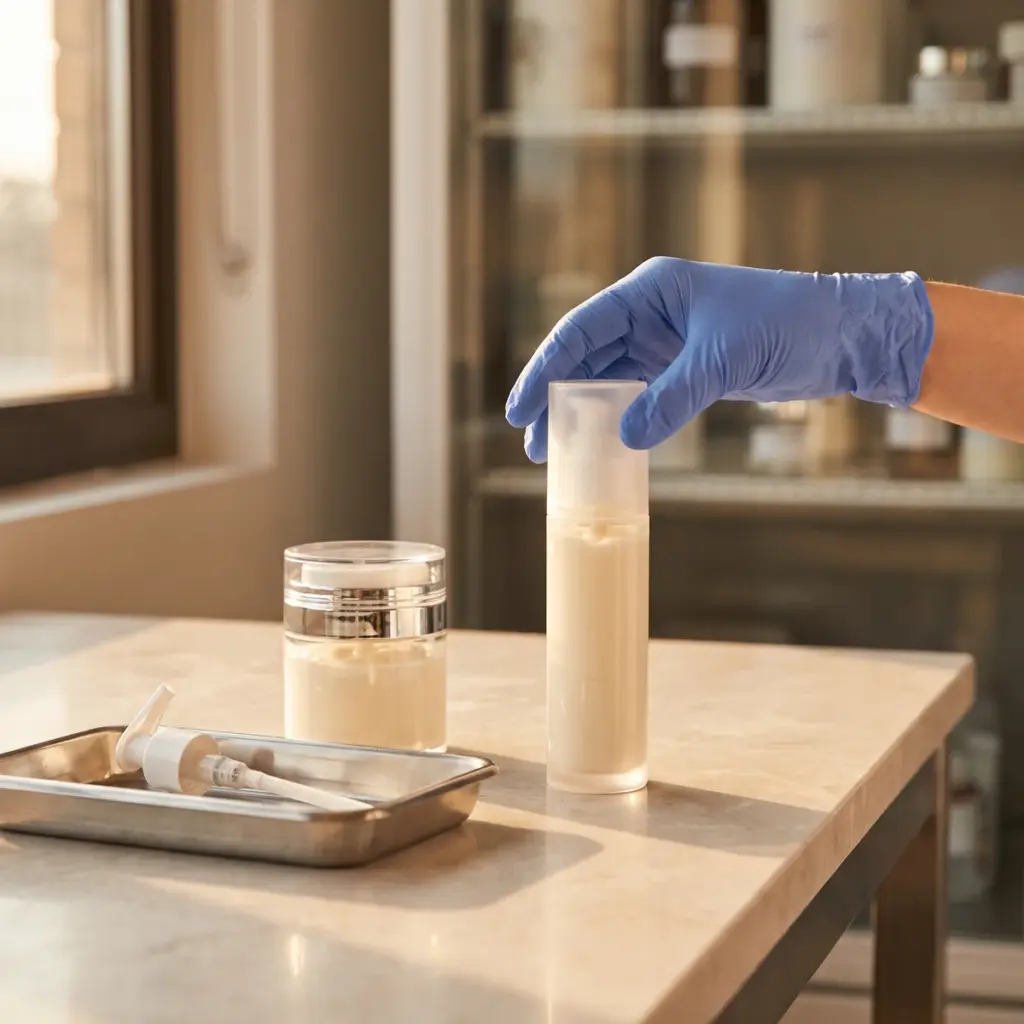
Each test condition is paired with a dark control: the same product, wrapped in foil or held in an opaque box beside the exposed samples. Any difference between the two is attributed to light. To measure what the pack contributes, the formula can be exposed in its final container, in a clear reference container and as a thin unprotected layer.
Measurements after exposure
- Colour change, measured with a colorimeter as well as by eye
- Odour evaluation against the dark control
- Assay of light-sensitive actives, colourants or UV filters, usually by HPLC
- Appearance and texture changes
- Degradation products, where the study includes targeted analysis
Light dose, colour change and active retention data
The report records the light source, filters, irradiance, total dose and chamber temperature, then sets out the measured change for each sample against its dark control. Colour data are given as numeric differences, assay results as the share of the starting content remaining, and photographs show the samples side by side. Where packs were compared, the results show how much protection each container gives the formula.
Using product photostability testing for pack and formula decisions
Most brands commission photostability work while the pack design is still open, so the data can steer the choice of container and the protection built into the formula.
Clear, tinted or opaque packaging
Clear bottles and jars look good on shelf and let the most light reach the formula. Running the same product in clear, tinted and opaque versions of a pack gives you measured colour and active retention for each, so the design team and the formulator can agree on a pack with data in hand. A UV absorber in the formula or a sleeve on the pack can be tested in the same study.
Light-sensitive actives and suncare
Retinoids, vitamin C derivatives, natural colourants and some fragrance materials are the usual reasons to test. For sun products, the study tracks how much of each UV filter remains in the stored product. That figure feeds the stability file and helps the formulator choose filter combinations that stay stable under light, while protection factors come from separate SPF and UVA measurements.
Light source, irradiance and HPLC method to check
Ask which light source and filters the laboratory uses, whether irradiance is calibrated and logged during each run, and how chamber temperature is held. For active retention you need an HPLC method validated for your ingredient in your matrix. Laboratories that already run accelerated stability testing can schedule both studies on the same batch, which keeps the data comparable.
More in Stability & Packaging Compatibility
Stability & packaging compatibility testing stores a cosmetic in its final pack under heat, cold and light to set shelf life and confirm pack fit.