Product–Packaging Interaction Testing overview
Do you provide Product–Packaging Interaction Testing?
What product-packaging interaction testing measures
A formula and its container exchange material for as long as they are in contact. Plasticisers, antioxidants, slip agents, ink components and oligomers can migrate from plastics into the product. In the other direction, lipophilic ingredients such as fragrance oils and some preservatives can dissolve into polyolefin walls or adsorb onto their surface, lowering their concentration in the formula. Thin walls and some closures also let oxygen and water vapour in, and let volatile ingredients escape.
Study design with a glass reference
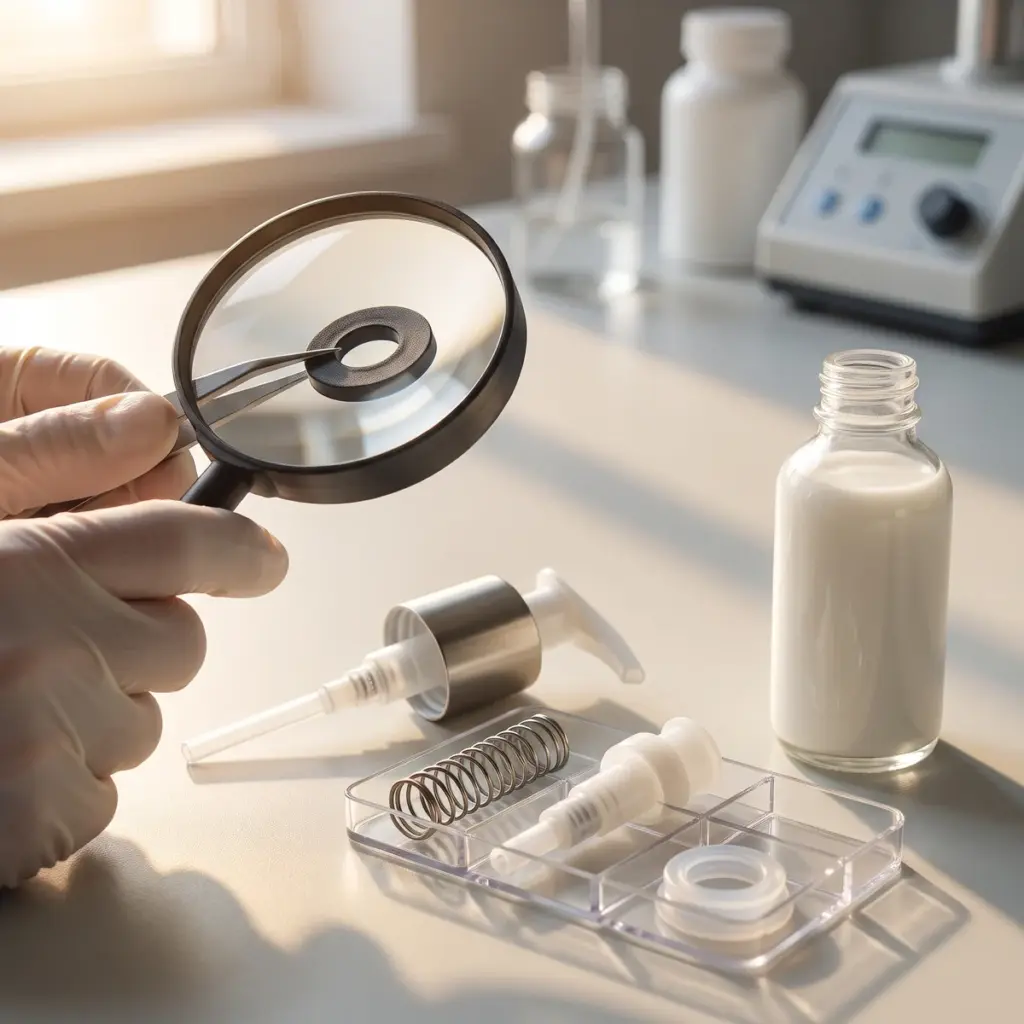
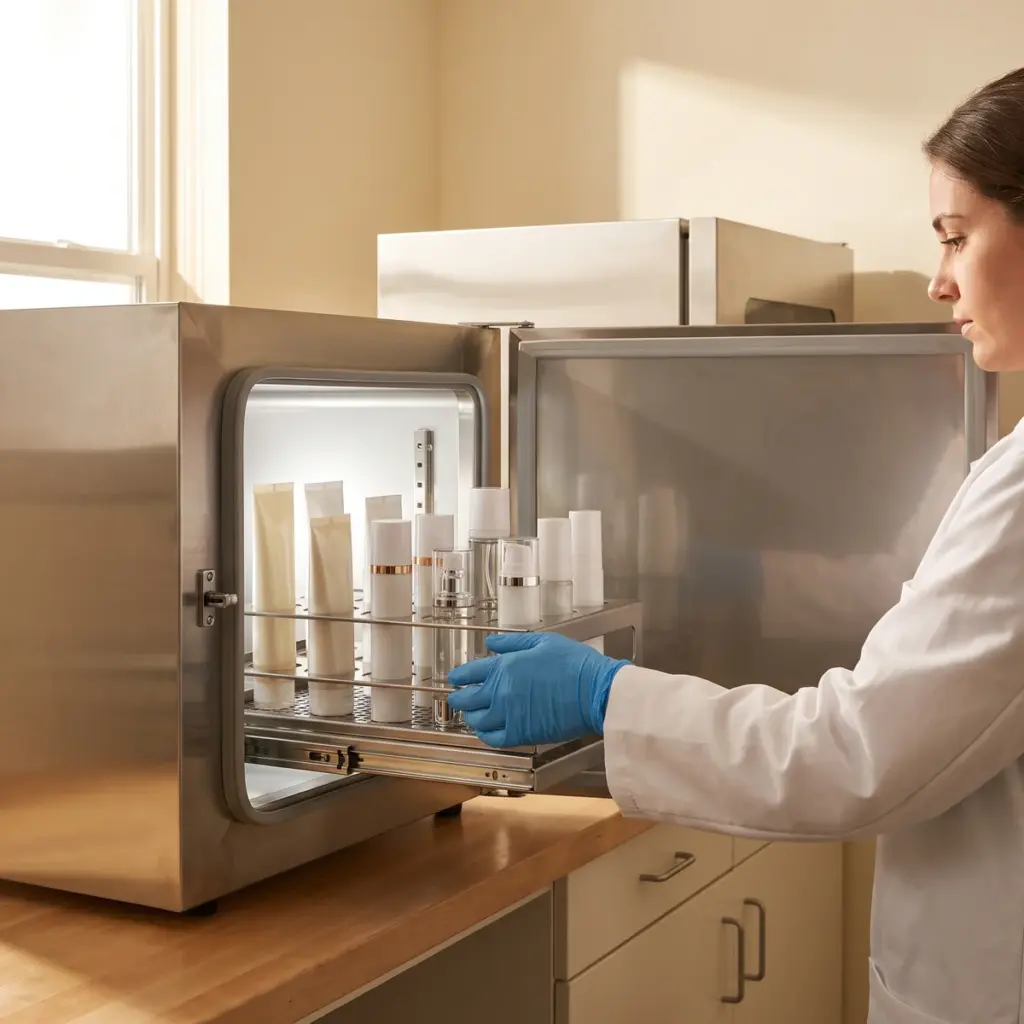
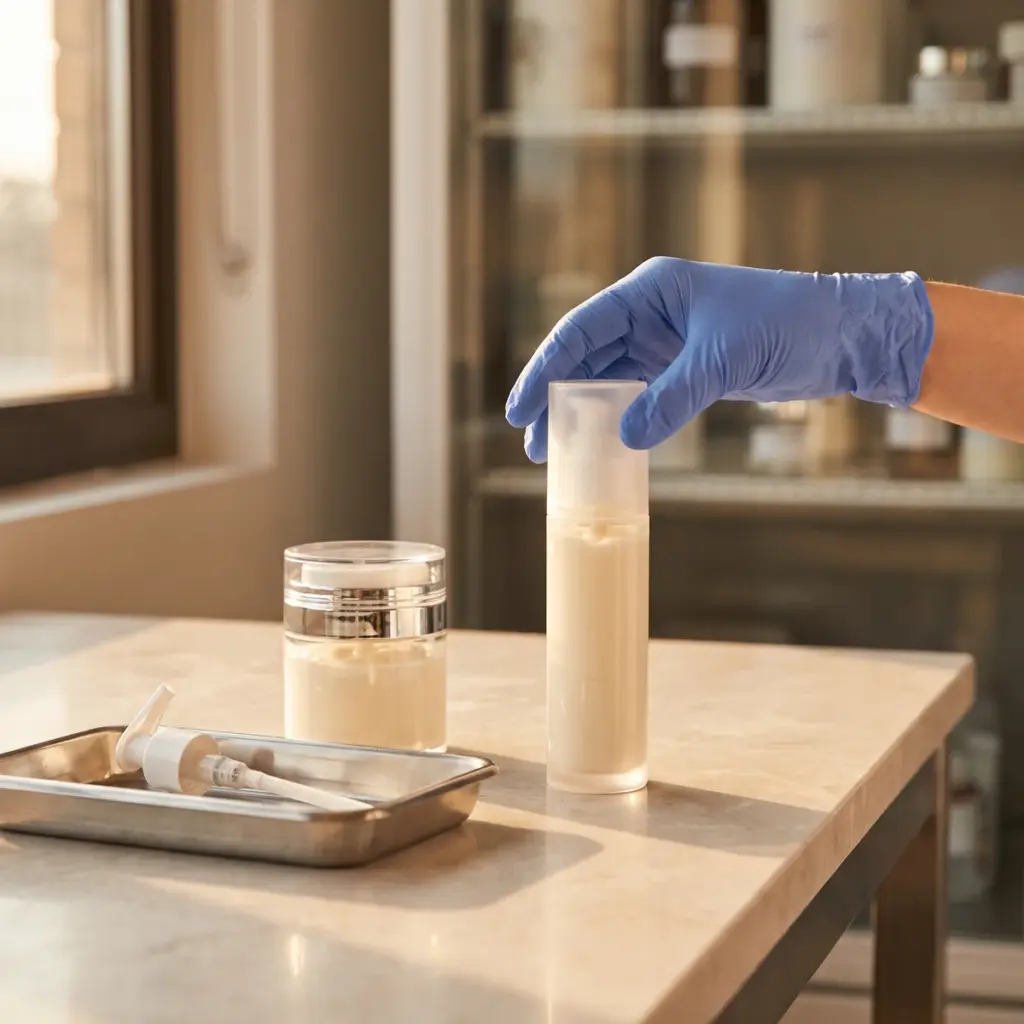
The laboratory fills the formula into the candidate pack and into an inert reference container, usually glass, and stores both under the same conditions. Comparing the two isolates the effect of the pack. Empty packaging can also be extracted with solvents to build an extractables profile, which tells the analyst which substances could migrate and what to look for in the stored product.
Analyses
- Extractables and leachables profiling by GC-MS or LC-MS
- Assay of fragrance markers, preservatives and actives to measure sorption losses
- Weight loss to measure water and volatile permeation
- Oxygen or moisture transmission of the pack where barrier is in question
- pH, odour, colour and appearance compared with the glass reference
Leachables data and ingredient loss over time
The report identifies substances found in the formula that came from the pack, with concentrations where quantified, and gives the loss of each tracked ingredient over time relative to the reference. Your safety assessor can use the leachables data in the toxicological evaluation, and the formulation team can see which ingredient losses call for a pack change or a formula adjustment.
When product-packaging interaction testing pays off
Interaction studies earn their cost at moments of change in the pack, and whenever stored product drifts from specification without an obvious cause.
Moving to a new container material
Switching from glass to plastic, or from virgin to recycled resin, changes what the formula meets. Recycled plastics in particular can carry a different profile of substances from their earlier life. An interaction study before the switch tells you whether fragrance strength, preservative content and leachable levels stay where your specification and safety assessment expect them.
Explaining unexplained losses
A preservative that falls below its effective level, or a fragrance that fades within months, is often a case of sorption into the pack. Measuring the ingredient in product stored in the real pack and in glass separates sorption from chemical breakdown. If the material itself cracks, swells or corrodes, packaging material compatibility testing looks at the component side.
Feeding the safety assessment
Leachables data give the toxicological safety assessment measured exposure figures for substances from the pack. Ask your packaging supplier for the material composition and any migration data before the study starts, since that narrows the target list and the analytical work.
More in Stability & Packaging Compatibility
Stability & packaging compatibility testing stores a cosmetic in its final pack under heat, cold and light to set shelf life and confirm pack fit.