Packaging Material Compatibility Testing

Packaging Material Compatibility Testing overview
Who provides Packaging Material Compatibility Testing
Companies providing Packaging Material Compatibility Testing

How packaging material compatibility testing assesses each component
Every material in a pack reacts to a formula in its own way. Oils and esters can swell or soften polyolefins and rubber seals. Solvent-rich products such as nail varnish removers and alcohol sprays attack some plastics and adhesives. Acidic or high-salt formulas corrode tinplate, aluminium and pump springs once a lacquer is breached. Surfactant-rich products can trigger environmental stress cracking in moulded parts under load.
Exposure methods
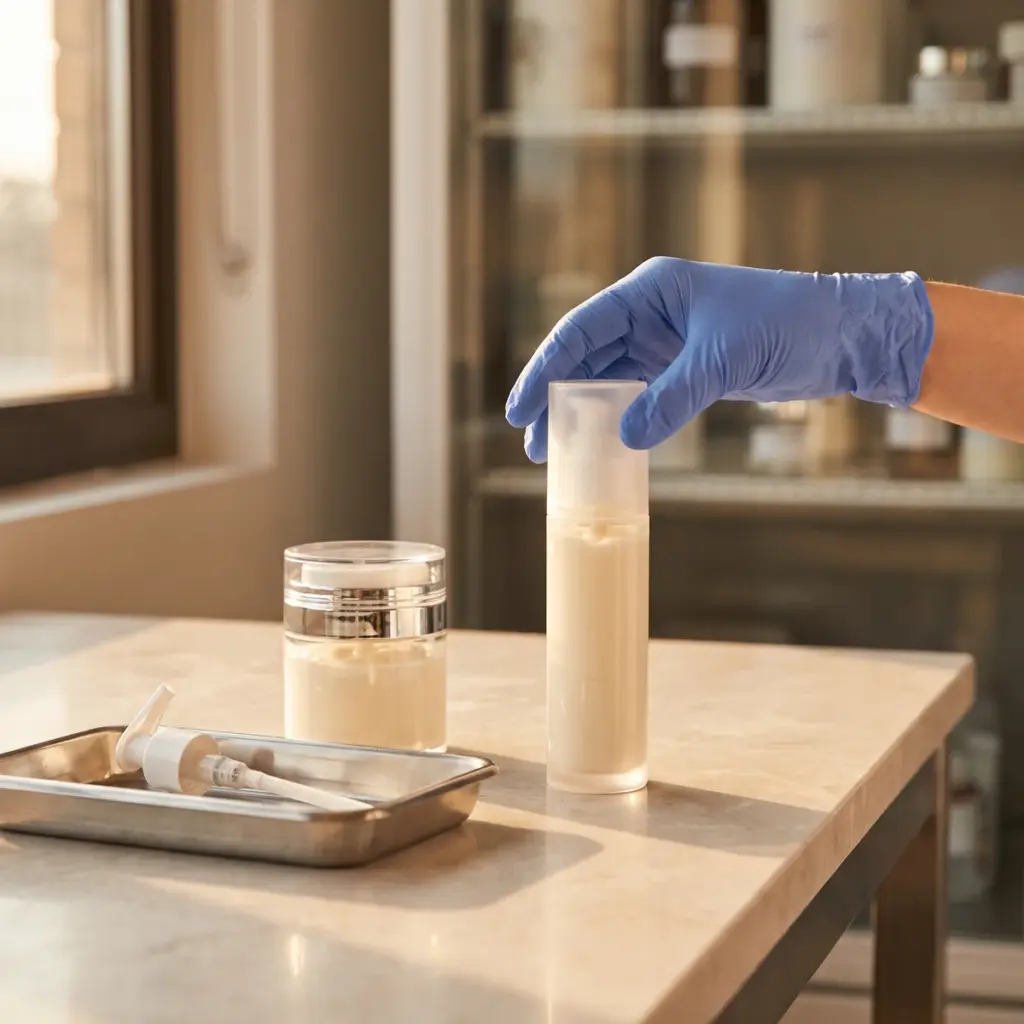
The laboratory uses two set-ups. In immersion testing, cut strips or whole components such as gaskets, dip tubes and springs are submerged in the formula and stored warm, with untreated pieces kept as references. In filled-pack testing, complete assembled packs are stored upright and inverted, so product sits against the closure and seal. Elevated temperature shortens the time to a visible effect, and storage at room temperature runs alongside.
Inspections and measurements
- Weight and dimension change of immersed components, to quantify swelling
- Hardness change in elastomers and soft plastics
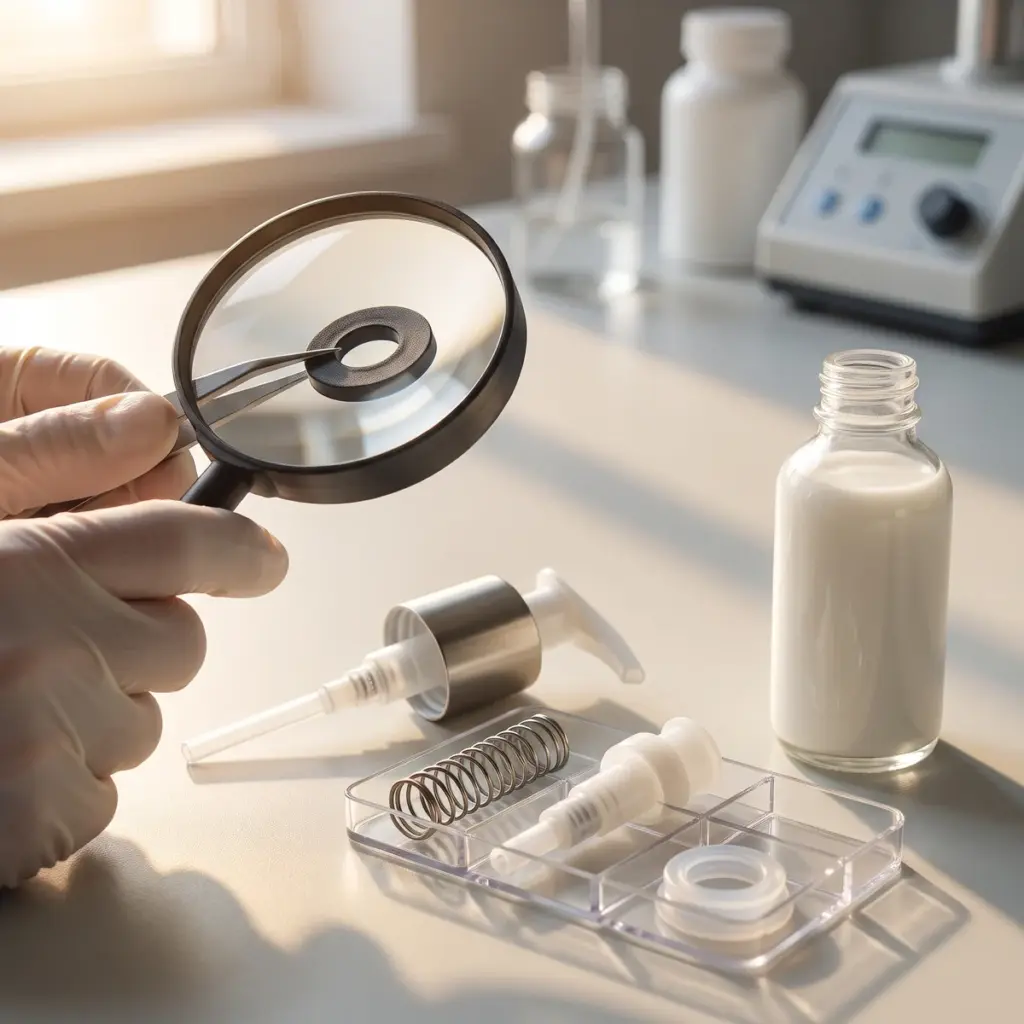
- Stress cracking, crazing and clouding under magnification
- Lacquer integrity, corrosion and delamination in metal and laminate packs
- Pump priming, dose output, spray pattern and actuation force after storage
- Leakage and torque retention of closures
Report and outputs
The report names every component and material grade tested, with supplier references, and gives the measured change for each against the untreated reference. Photographs document cracks, corrosion spots and deformed parts. Functional results show whether dispensers still deliver their specified dose. You end up with a clear list of components that passed and those that need a different material or a protective coating.
Choosing packs with packaging material compatibility testing
The study is most useful while the pack specification is still being drawn up and suppliers can still be changed.
Matching formula chemistry to materials
The formula type tells you where to look. Oil-rich serums and cleansing balms call for checks on polyethylene and polypropylene swelling and on the elastomer in the pump. Alcohol and solvent products need attention on closures, adhesives and printed decoration. Low-pH exfoliants and salt-rich formulas put metal springs and aluminium tubes at risk. Giving the laboratory the full formula and pH lets it pick the right inspections from the start.
Approving alternative components
A second-source pump or a cheaper resin grade can look identical and behave differently. Testing the new part next to the approved one, with the same formula and conditions, gives you a direct comparison before you sign off the change. Record the exact component references in the report, since a later change in grade or supplier needs its own check.
Combining with formula-side studies
Material testing tells you whether the pack survives. Whether the formula loses fragrance or picks up substances from the pack is answered by product-packaging interaction testing. Filled packs from accelerated stability testing can be inspected for component damage at each pull point, which saves product and chamber space.
More in Stability & Packaging Compatibility
Stability & packaging compatibility testing stores a cosmetic in its final pack under heat, cold and light to set shelf life and confirm pack fit.