UV absorption & reflection overview
Do you provide UV absorption & reflection?
How UV absorption & reflection testing measures a sunscreen film
Organic filters absorb UV energy, while mineral filters such as titanium dioxide and zinc oxide absorb part of it and scatter the rest. The test captures the combined effect as the fraction of light that passes through a film of known dose, and can add a separate reflectance reading for formulas that rely on scattering.
Plate preparation and application
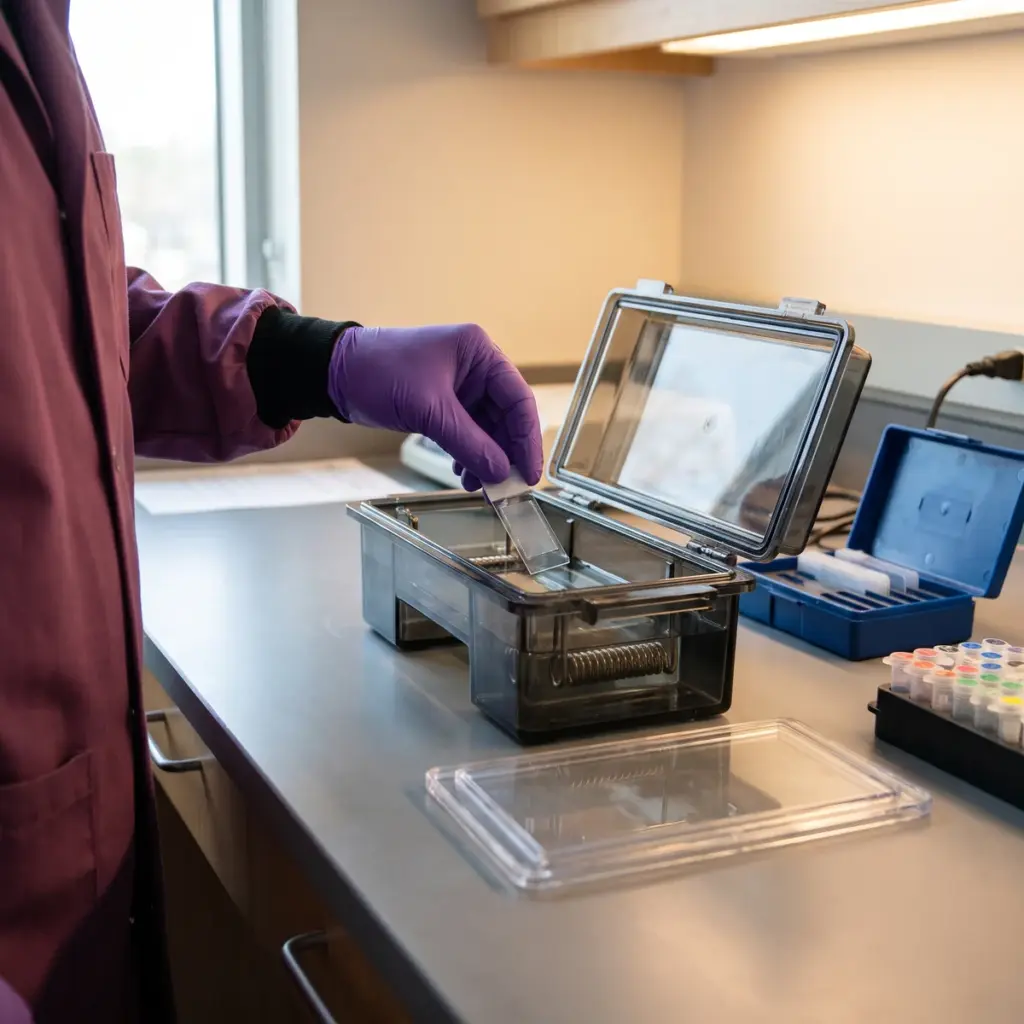
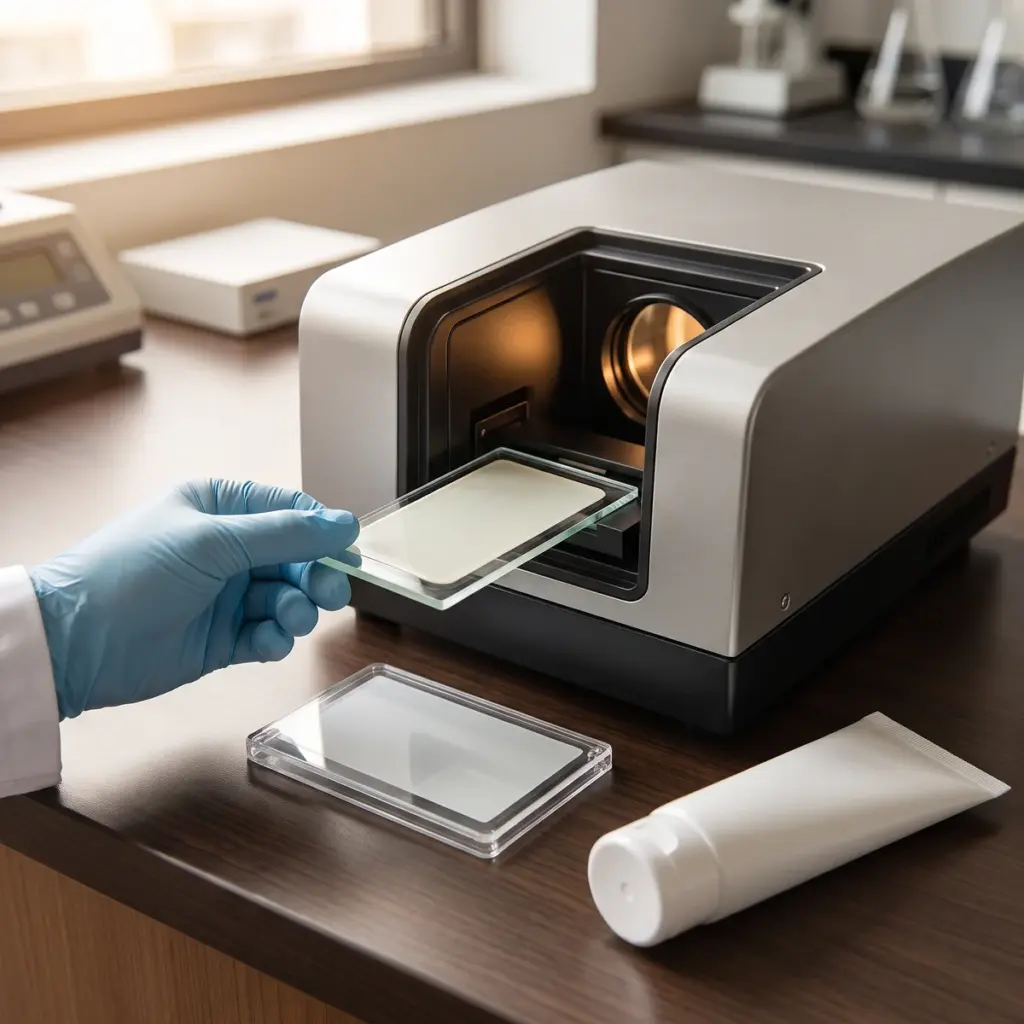
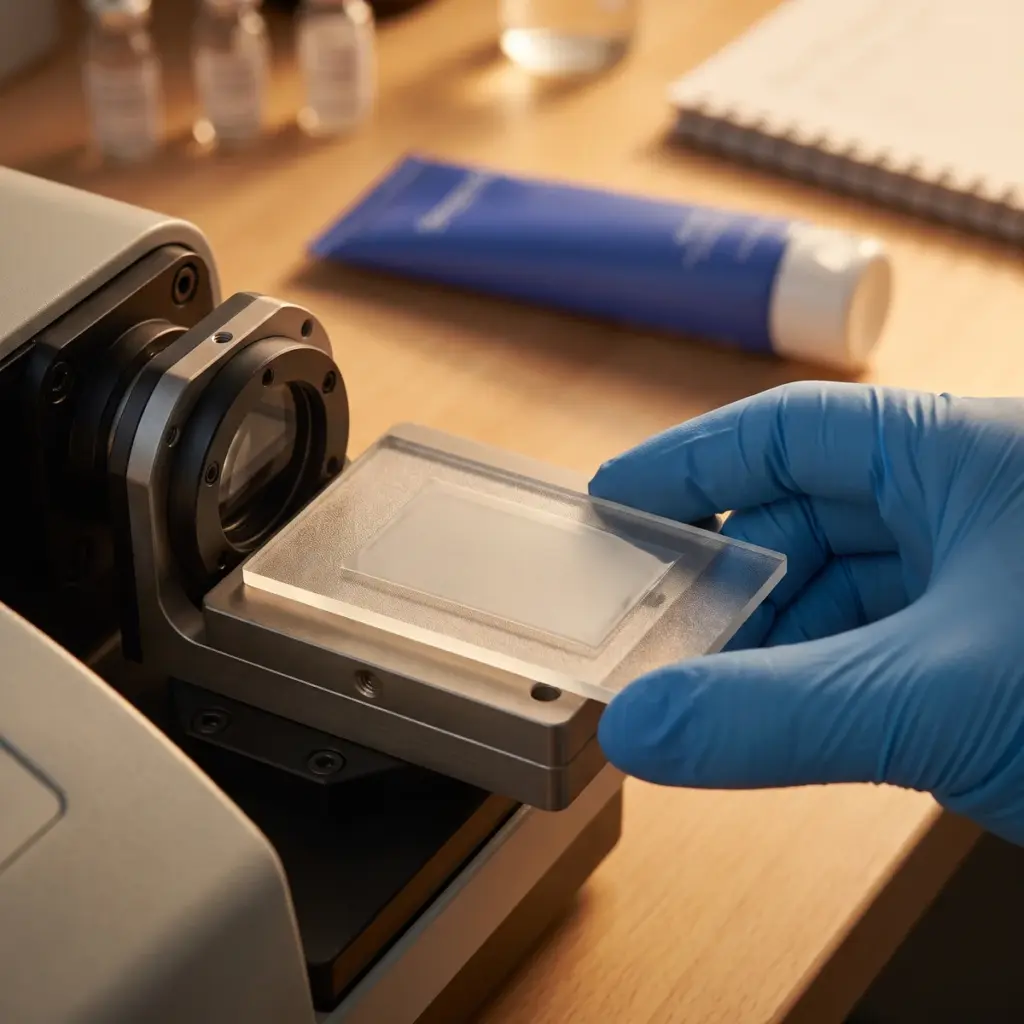
The product is weighed onto a moulded or sandblasted PMMA plate whose roughness imitates the skin surface. A technician or an automated spreader distributes it evenly at the dose the protocol sets, and the film is left to settle in the dark before measurement. Blank plates treated with glycerine or another non-absorbing reference give the baseline.
Spectral measurement and irradiation
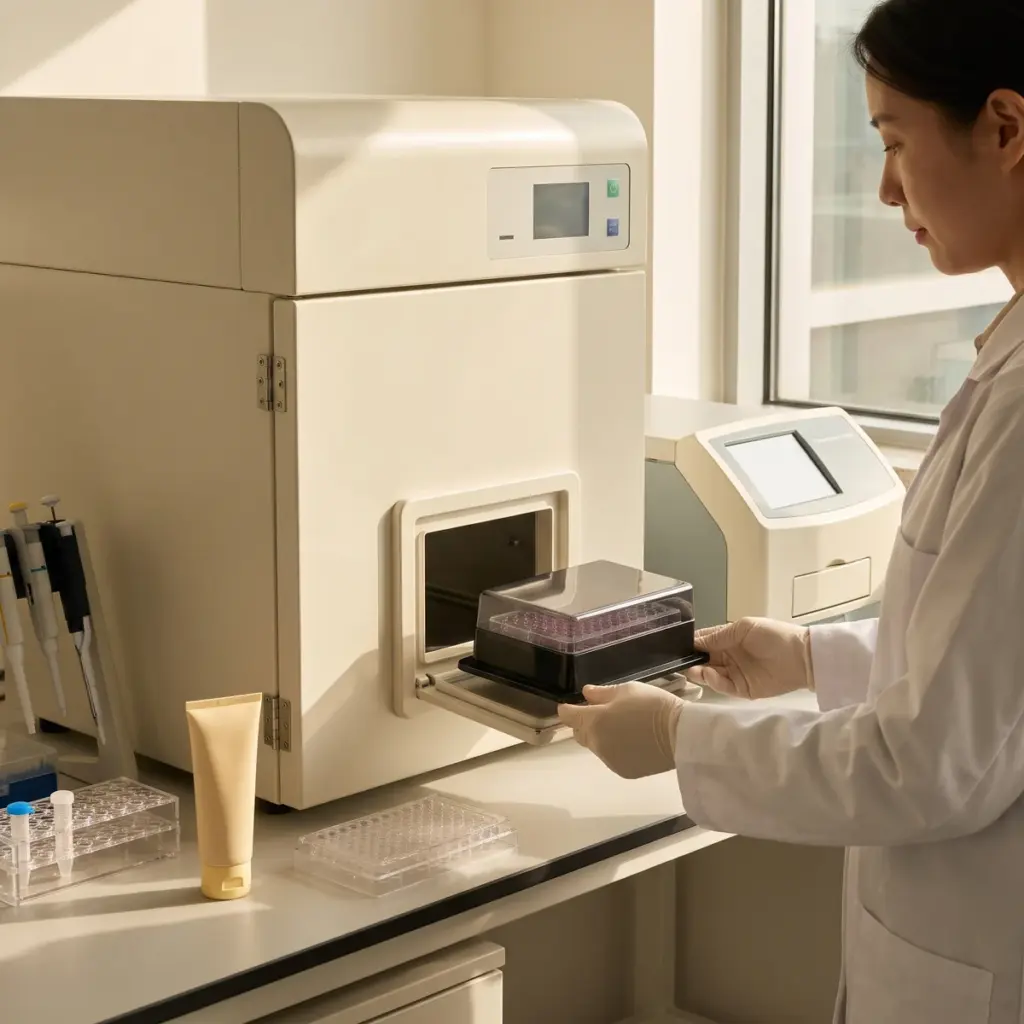
The plate is scanned at several positions across 290 to 400 nm, and the readings are averaged into one absorbance curve. For photostability, the same plate is exposed to a defined dose from a solar simulator and scanned again. Comparing the two curves shows which filters degrade and in which part of the spectrum.
Transmission, absorbance and reflectance spectra supplied
- Transmission and absorbance spectra before and after irradiation
- Critical wavelength
- UVA/UVB ratio
- In vitro UVA protection factor where the ISO 24443 protocol is used
- Diffuse reflectance spectra for mineral-based films
The report sets out plate type, application dose, irradiation dose and instrument settings, so you can rerun the same comparison on later prototypes and read the results side by side.
Using UV absorption & reflection data in sunscreen development
Optical spectra guide the formulator from the first filter blend to the batch that goes for SPF testing.
Screening filter systems early
Optical data is the cheapest way to compare filter blends. Run five or six prototypes together and the spectra show at once which one leaves a dip in the long UVA range, which loses absorbance after irradiation and which has the flattest profile. The formulator can then adjust filter ratios or add a photostabiliser before any volunteer is involved. Results also help when you change a filter supplier or an emollient, since both can shift the curve.
Choosing a laboratory for in vitro UV work
Ask which plates the lab uses and whether it controls their roughness, as plate type changes the result more than most other variables. Check that the spectrophotometer has an integrating sphere and that the solar simulator output is measured with a calibrated radiometer. If you need a UVA protection factor for a European label, confirm the lab runs the full ISO 24443 procedure with the in vivo SPF value as input. Labs that also handle sun protection efficacy testing on cell models can run optical and biological work on the same batch.
More in UV-Response Mechanism Studies
UV-Response Mechanism Studies measure how ingredients absorb UV and how skin cells handle UV stress, from DNA damage to free radicals and immunity.