Sun protection efficacy testing overview
Do you provide Sun protection efficacy testing?
How sun protection efficacy testing combines optics and skin biology
A sun-care formula protects skin in two ways. Its filters attenuate the radiation before it reaches living cells, and some of its actives change how cells cope with the radiation that gets through. A sun protection testing programme measures both, so you can see what each part of the formula contributes.
Optical performance of the product film
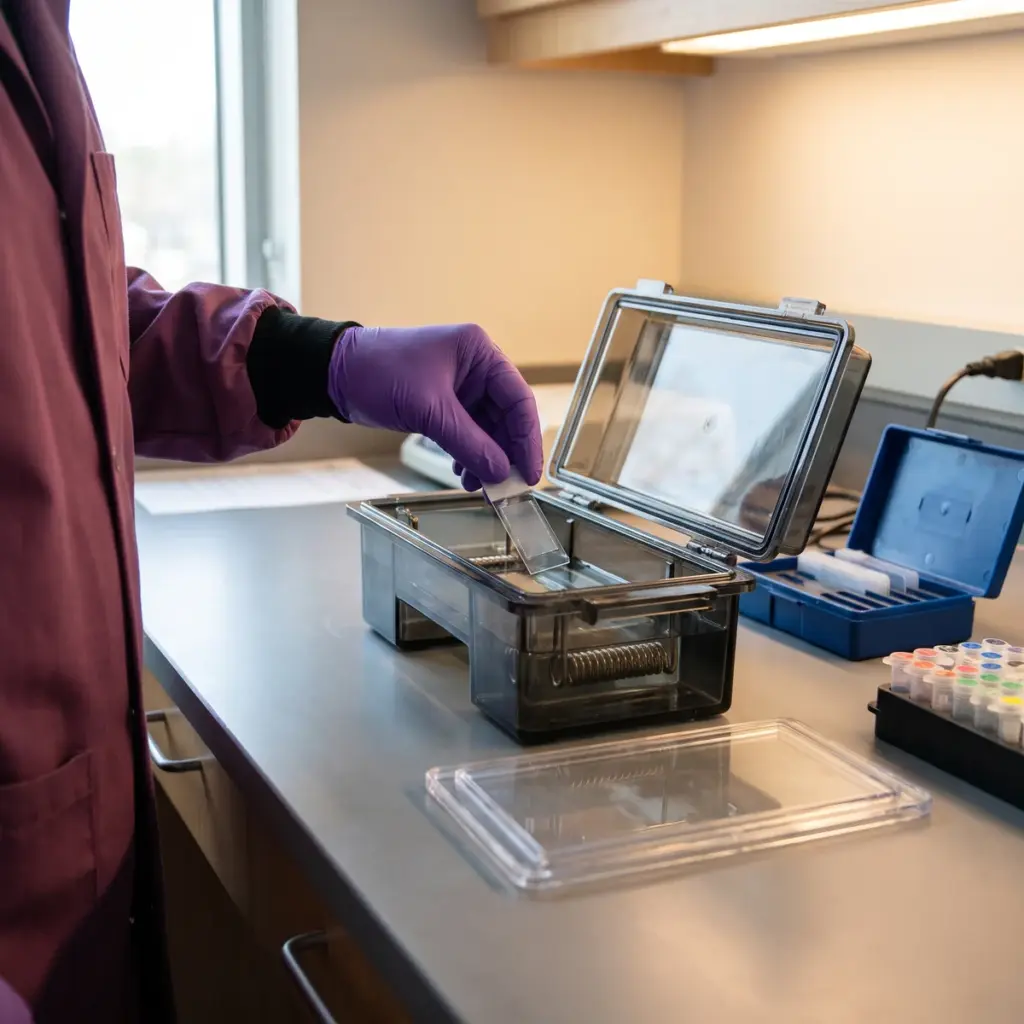
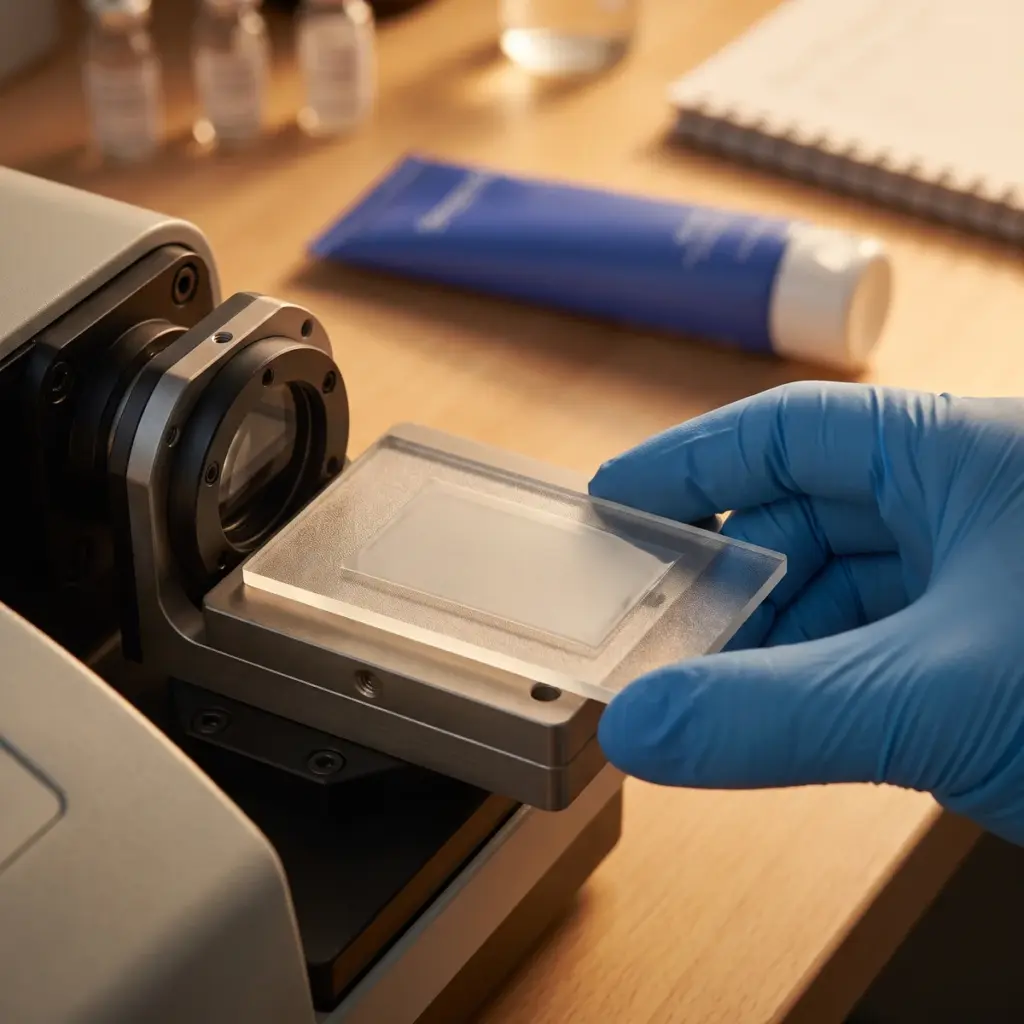
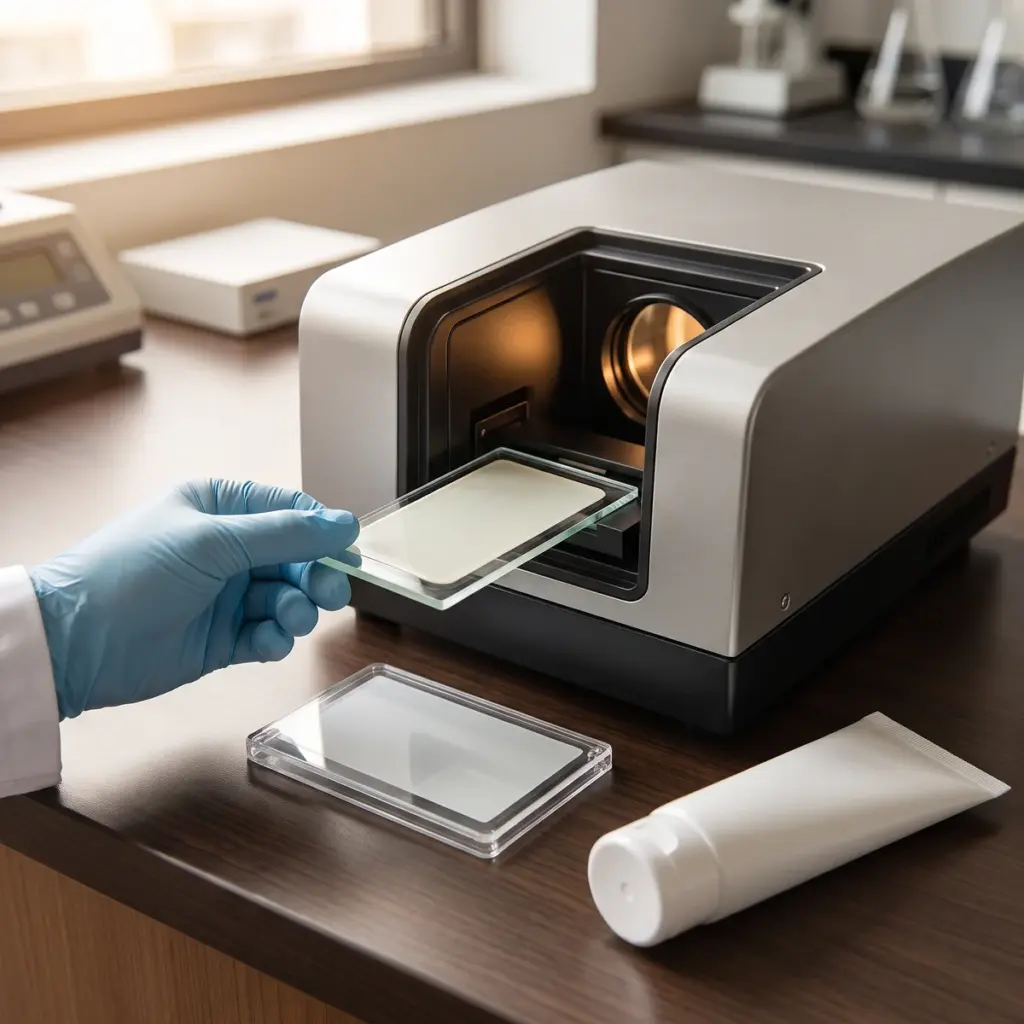
The formula is spread at a defined dose on a roughened PMMA plate and scanned from 290 to 400 nm. UV absorption and reflection testing gives the transmission curve, the critical wavelength and the balance between UVA and UVB attenuation, before and after a pre-irradiation dose that reveals filter photostability.
Cell and tissue response to simulated sunlight
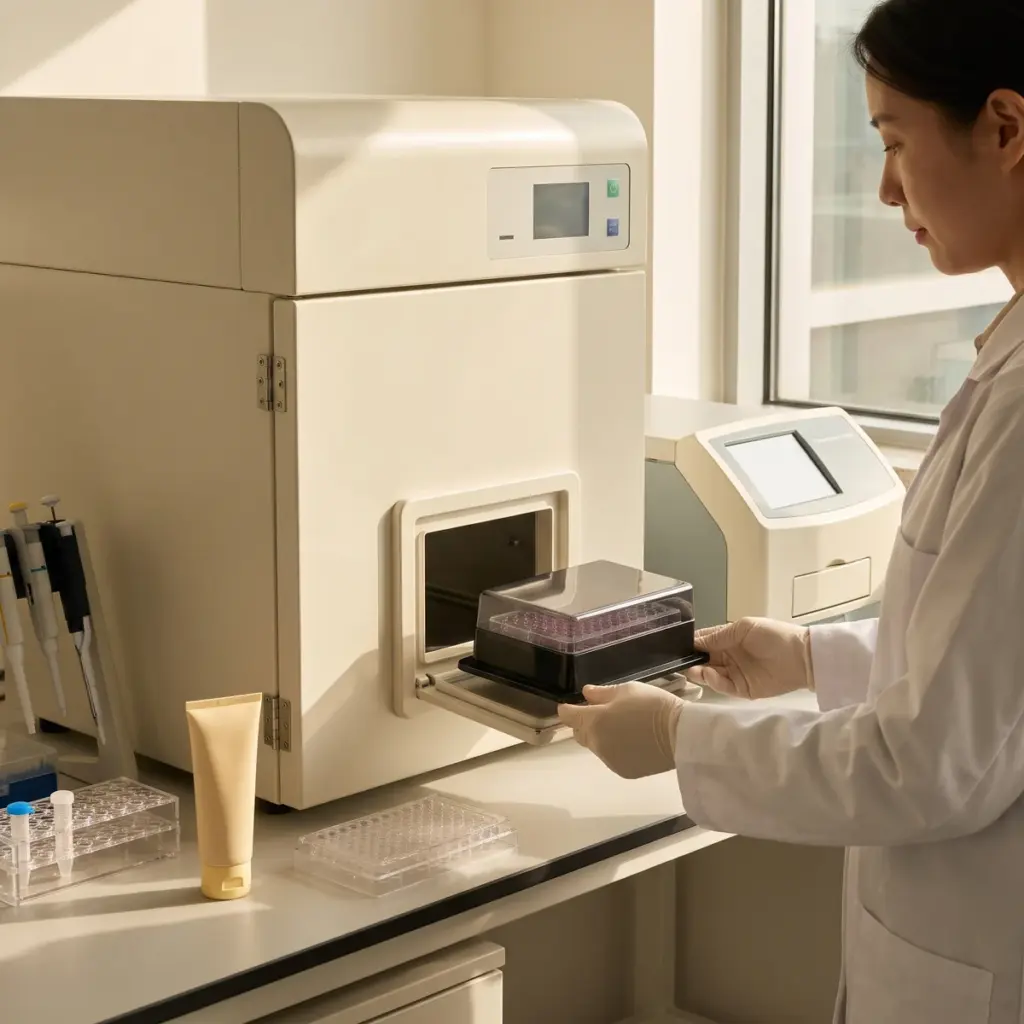
Keratinocyte monolayers or reconstructed human epidermis are treated with the product or active, then irradiated with a calibrated solar simulator. The laboratory measures cell damage through LDH release and viability assays such as MTT, and adds mechanism endpoints where the active calls for them. Typical add-ons are ROS scavenging assays for antioxidant systems and comet or CPD assays for DNA-targeted actives.
UV spectra, critical wavelength and LDH data delivered
- UV transmission and absorbance spectra for each formula
- Critical wavelength and UVA/UVB ratio values
- LDH release and viability data against irradiated and non-irradiated controls
- Mechanism endpoint results with statistical comparison
- A study report with protocol, UV dosimetry and raw data
Because the optical and biological data come from the same formulas, the report shows which prototypes filter best and which add measurable cell protection under the same UV dose.
Using sun protection efficacy testing in a sun-care programme
The study is most useful early, while the filter system and actives can still change, and again before launch to back the claims you print.
Matching each test to the claim
SPF and UVA protection values on the label come from the standard methods, such as ISO 24444 for in vivo SPF and ISO 24443 for in vitro UVA protection. Sun protection efficacy testing sits beside those methods. Its optical data tells you which prototype is worth sending to an SPF panel, and its cell data supports wording such as “helps protect skin cells from UV-induced stress” or “contains antioxidants that limit free-radical damage from sunlight”.
Planning the study sequence
Most programmes start with optical screening of several prototypes, because it is fast and needs no biological material. The best two or three formulas then go into the cell or tissue model, where the active ingredients have a chance to show an effect beyond filtering. If an active targets a specific pathway, a dedicated study follows: DNA repair stimulation for after-sun actives, or immune-function work for premium daily protection.
Filter system, actives and target markets to state
Give the laboratory the formula type and filter system, the actives you want to evaluate, and the claims you are aiming for. Say whether you will test raw actives, finished products or both, since emulsions are applied topically to reconstructed skin while raw actives can go into the culture medium. State the markets you plan to sell in so the lab can align the optical protocol with the SPF and UVA tests that will follow.
More in UV-Response Mechanism Studies
UV-Response Mechanism Studies measure how ingredients absorb UV and how skin cells handle UV stress, from DNA damage to free radicals and immunity.