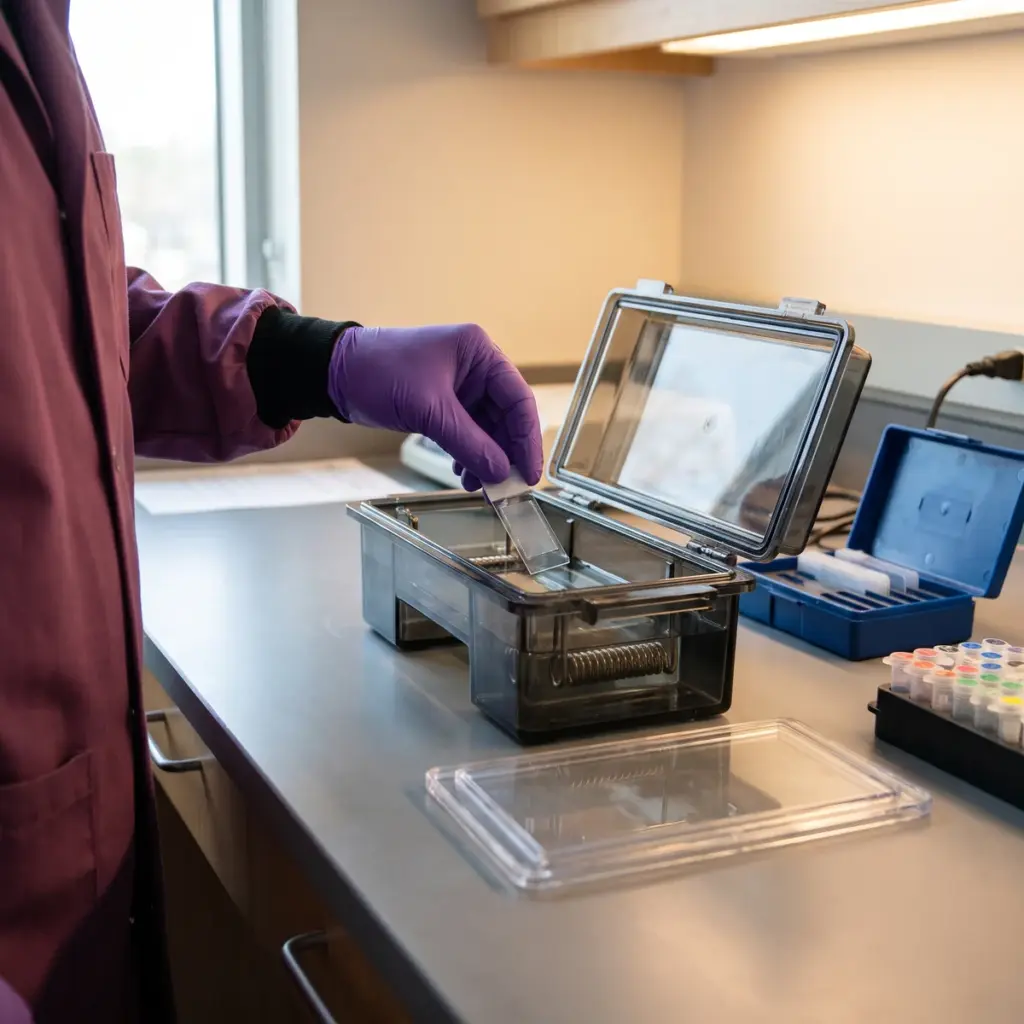
DNA protection testing overview
Do you provide DNA protection testing?
How DNA protection testing quantifies UV-induced damage
UVB creates photoproducts directly in DNA, and UVA damages it mostly through oxidation. A DNA protection study measures one or both kinds of damage in cells that received the active before the challenge, and compares them with cells that did not.
Pre-treatment and challenge design
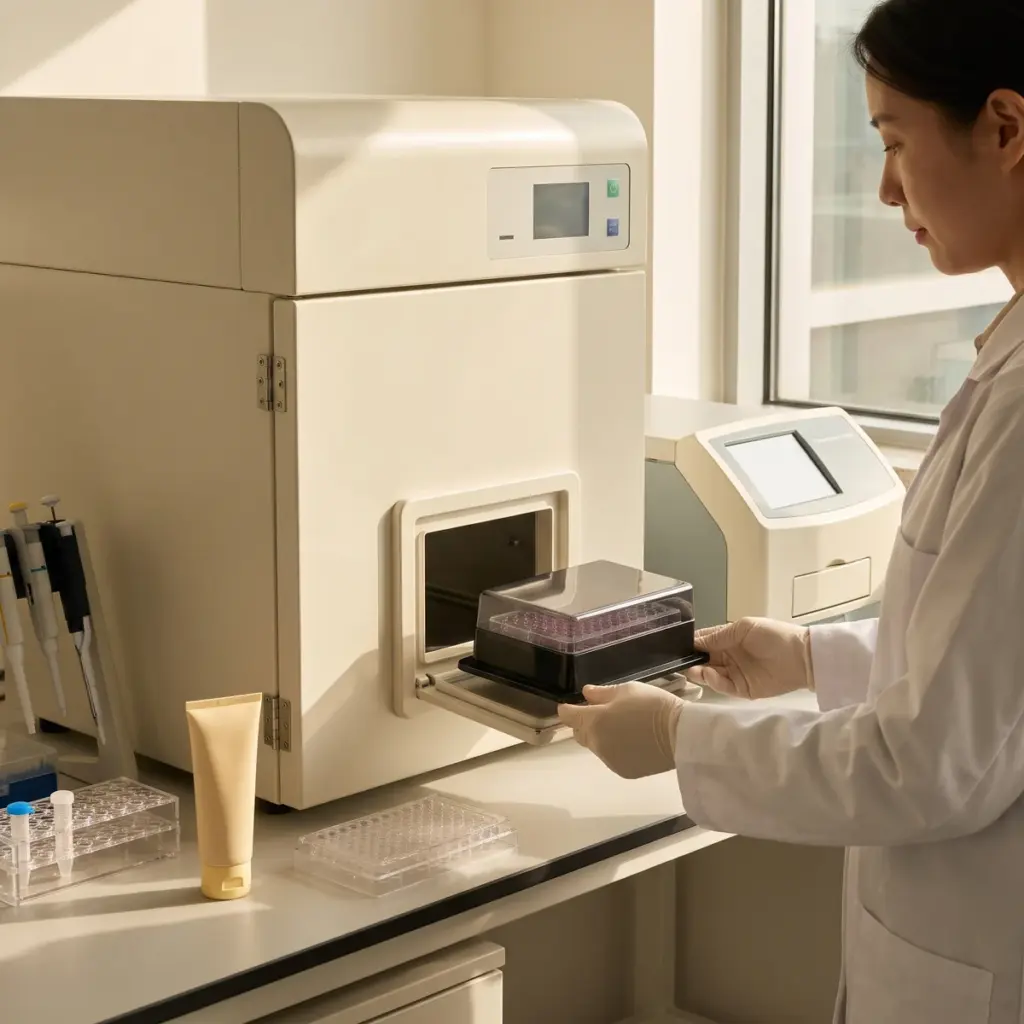
Human keratinocytes, fibroblasts or reconstructed epidermis receive the active for a set period, usually a day or so, and are then irradiated with UVB, UVA or solar-simulated light. Some protocols use hydrogen peroxide as an oxidative challenge. Cells are harvested straight after exposure, before repair has time to change the picture, so the reading reflects the damage that formed.
Damage endpoints
- Comet assay tail DNA or tail moment for strand breaks
- Comet assay with repair enzymes for oxidised bases
- CPD and 6-4 photoproducts by ELISA or immunostaining
- 8-oxo-dG by immunoassay or chromatography
- Gamma-H2AX foci for double-strand breaks
The laboratory picks endpoints to match the UV range and the active. A filter-like ingredient is best shown on CPDs under UVB, while an antioxidant shows its effect on 8-oxo-dG and oxidative comet readings under UVA.
DNA damage values, comet images and UV dosimetry
You receive damage values for each group with statistical comparison against the irradiated control, representative comet or immunofluorescence images, viability data and full UV dosimetry. A positive reference such as a known antioxidant can be added so the result for your active sits on a familiar scale.
Using DNA protection testing in active and product development
DNA protection data is often the strongest mechanism result an ingredient supplier can put in front of a sun-care formulator.
Protection or repair: picking the design
A protection study answers whether the active reduces the damage that forms. A repair study answers whether it helps cells clear damage that has already formed, and calls for post-exposure treatment and several time points. Day creams and sunscreens suit the protection design. After-sun and night products fit DNA repair stimulation studies better, and some suppliers commission both for one active.
Cell DNA protection claims for datasheets and products
Results support mechanism wording on ingredient datasheets and finished-product claims such as “helps protect skin cell DNA from UV damage” or “limits oxidative DNA damage caused by sunlight”. They pair well with ROS scavenging data, which shows the antioxidant step that comes before oxidative DNA damage.
Laboratory capabilities to check
Ask whether comet slides are scored blind with image-analysis software, and how many cells are scored per slide. Check that the anti-CPD antibody or ELISA kit is validated in the lab, and that UV dose at the cell surface is measured with a radiometer before each run. Labs that can run the study on reconstructed epidermis let you test a finished cream applied topically.
More in UV-Response Mechanism Studies
UV-Response Mechanism Studies measure how ingredients absorb UV and how skin cells handle UV stress, from DNA damage to free radicals and immunity.