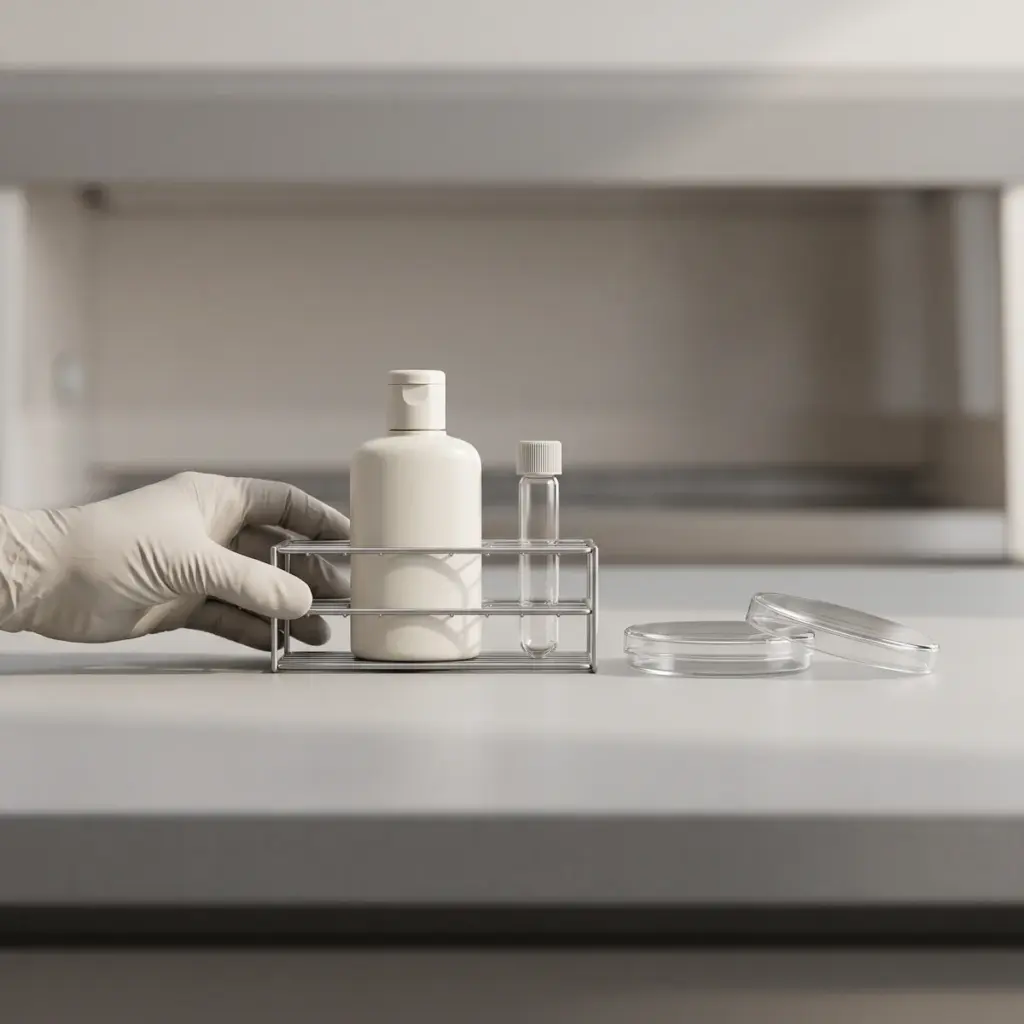
Microbiome friendly formulation testing overview
Do you provide Microbiome friendly formulation testing?
What microbiome friendly formulation testing measures
The test material is the finished formula with its preservative system in place. Preservatives and surfactants are the ingredients most likely to affect skin bacteria, so testing the complete product gives the answer that matters for the claim.
Commensal strain panel
A typical panel includes Staphylococcus epidermidis, Cutibacterium acnes and other resident species chosen for the skin site, such as Corynebacterium for underarm products or Malassezia for scalp care. Each strain is exposed to the product at a dilution and contact time that reflect use, short for rinse-off products and longer for leave-on. Viable counts after exposure are compared with the untreated control and with a reference formula of known behaviour.
Community balance and diversity
Mixed communities of several species, or bacteria recovered from skin swabs, show whether the formula shifts the balance between organisms. 16S rRNA sequencing reports relative abundance and diversity indices before and after exposure. Some programmes add reconstructed or ex vivo skin colonised with bacteria, which brings the skin surface into the model.
Acceptance criteria and deliverables
The laboratory and the brand agree the criteria at the outset, for example the maximum permitted reduction in each commensal count and the expected stability of diversity indices. The final report contains:
- Agreed acceptance criteria
- Viable counts per strain after exposure
- Community composition and diversity data
- Comparison with untreated and reference controls
- A conclusion against each criterion
Preparing a microbiome friendly claim for launch
A microbiome friendly claim rests on the exact formula that goes to market, so plan the study around your final launch version.
Timing in development
Test the final formula with its final preservative system, since a change of preservative can move the result. Many brands run a short strain screen on two or three prototypes first, then put the chosen formula through the full panel. Pairing the result with a microbial pH-response study shows whether any effect comes from the formula’s acidity.
Fit with preservation testing
Your product also needs a preservative efficacy test, the challenge test that shows the formula controls contaminating organisms. The two studies use different organisms and answer different questions, so plan both in the same development cycle. A formula that passes the challenge test and keeps commensal counts near control at use dilution gives you a consistent data set for the claim.
Acceptance criteria and Malassezia culture to confirm
Ask which acceptance criteria the laboratory applies and whether they match the certification scheme you intend to use. Check that it can culture anaerobes such as C. acnes and lipid-dependent yeasts such as Malassezia if your product targets the scalp. For sequencing, ask at what taxonomic level results are reported.
More in Microbiome Interaction Studies
Microbiome Interaction Studies show how a cosmetic ingredient or formula affects skin bacteria, from lone strains in culture to communities on volunteers.