Green Chemistry & Process Development overview
Do you provide Green Chemistry & Process Development?
Green chemistry & process development for cosmetic ingredient routes
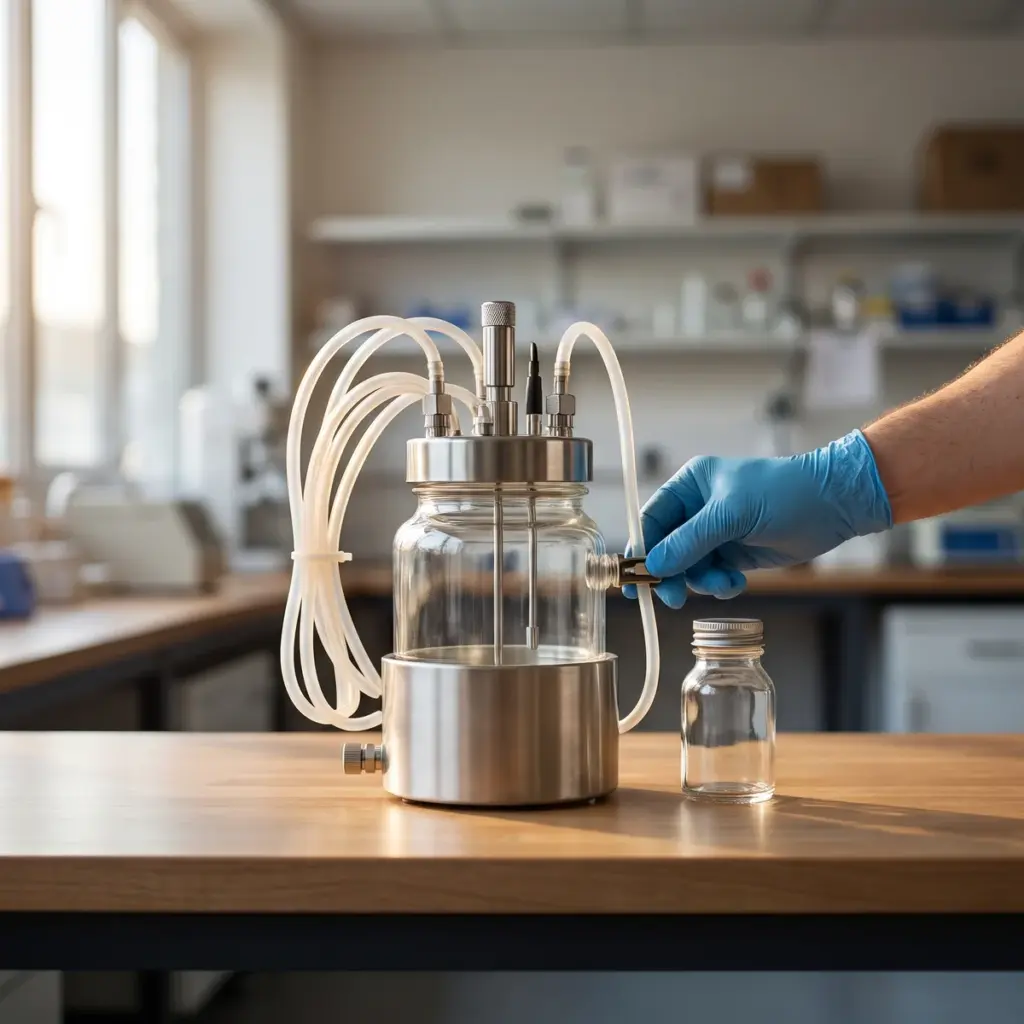
Most cosmetic ingredients can be made in more than one way. An ester can be produced by acid-catalysed chemistry at high temperature or by a lipase under mild conditions. A botanical active can be recovered with organic solvents, supercritical carbon dioxide or water. Process development uses the twelve principles of green chemistry to choose between such routes and refine the one with the lower hazard and resource footprint.
Route comparison metrics
Each route is scored against a defined comparator, usually the current process. Atom economy shows how much of the starting material ends up in the product. Process mass intensity and E-factor express total material input and waste per kilogram of ingredient. Solvents are ranked with published solvent selection guides, and energy demand is estimated from reaction temperatures, durations and separation steps.
Process options in cosmetic ingredient production
- Enzyme-catalysed synthesis or modification
- Fermentation-based production of actives
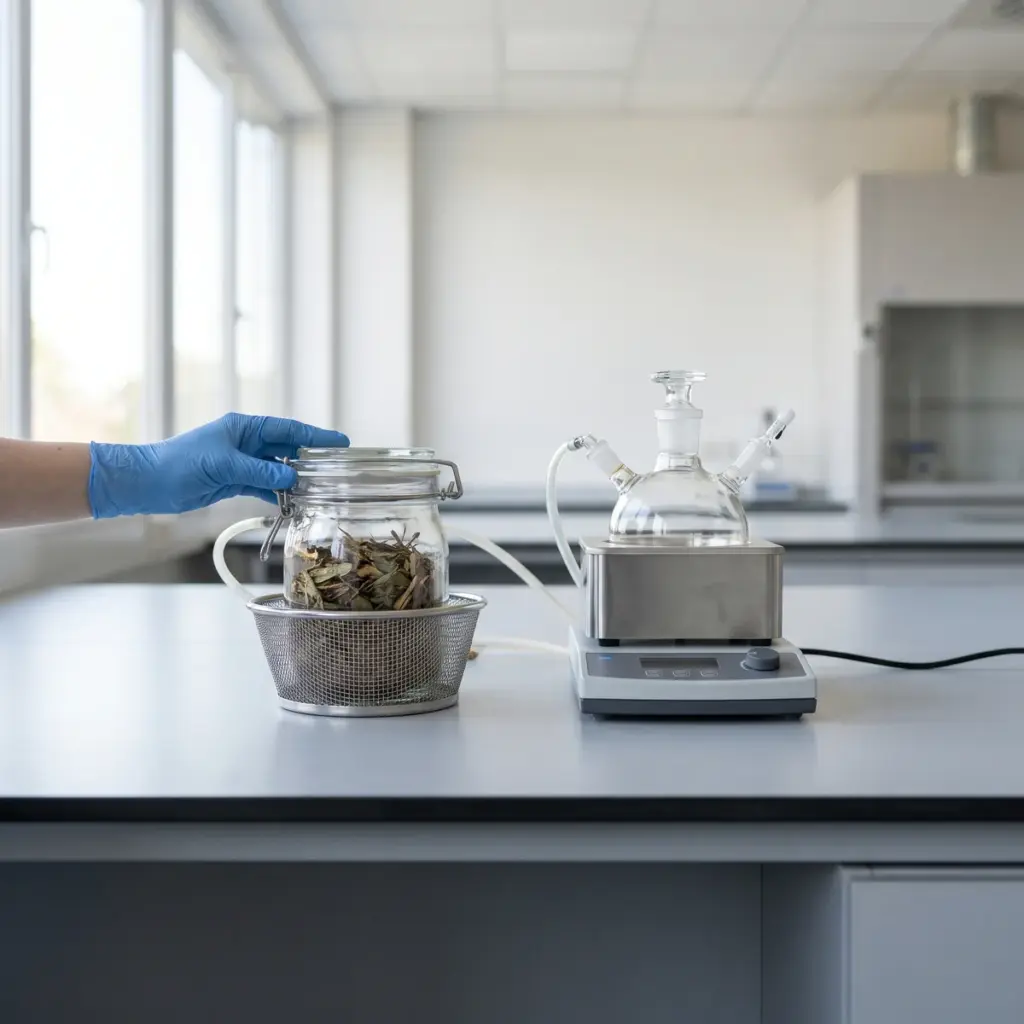
- Water-based or solvent-free extraction
- Supercritical carbon dioxide extraction
- Encapsulation with polymers chosen for their environmental profile
Verifying material from the new route
A change of solvent or catalyst can shift the composition of the product, so material from the redesigned process is characterised and compared with the reference ingredient. Stability and compatibility trials confirm it behaves the same way in formulation. Biodegradability and aquatic toxicity studies document the environmental fate of the ingredient. Cell-based assays or reconstructed skin models are added when the new route introduces a different residue or by-product.
Report and process package
You receive a route comparison report stating the process boundary and the metrics for each option, analytical data comparing new and reference material, and a laboratory-scale process description for the selected route.
Putting green chemistry & process development to work on your ingredient
Process data from a green chemistry project feeds sourcing decisions, supplier questionnaires and product communication. How you brief the work decides which of these uses it can support.
Backing environmental claims with process data
A claim such as “produced by biocatalysis” or “extracted without organic solvents” needs a documented route behind it. Reductions in waste or energy need a stated baseline, so the report should name the comparator process and the steps included in the calculation. Biodegradability results from standard test methods support end-of-life statements about the ingredient itself.
Route, specification and volume details to share
Share the current process or a literature route, the specification the ingredient must meet, the expected annual volume and any solvents or reagents you want removed. Volume changes the answer: a route that works for a few hundred kilograms can be impractical at several tonnes. If the redesign moves to fermentation or enzymes, the provider may bring in a biotechnology development laboratory for the biological step.
Timing within ingredient development
Green chemistry costs least when it is applied early, before a process is validated and documented for customers. During novel ingredient development, a laboratory-scale route comparison lets you choose the cleaner option before scale-up fixes it in place. For established ingredients, the work usually accompanies a supply review or a planned solvent phase-out.
More in Ingredient Production Processes
Ingredient production process services work out how to make a cosmetic active by fermentation, biotech or greener chemistry, and supply first samples.