Biotechnology-Based Ingredient Development

Biotechnology-Based Ingredient Development overview
Who provides Biotechnology-Based Ingredient Development
Companies providing Biotechnology-Based Ingredient Development
Biotechnology-based ingredient development: fermentation, purification and cell testing
Biotechnology gives access to cosmetic actives that are difficult to obtain from plants or petrochemical synthesis. A microorganism, an enzyme or a cell line does the production, and the laboratory controls the conditions so the output stays consistent. Hyaluronic acid made by bacterial fermentation is the familiar example. Peptides, polysaccharides, enzymes and bioengineered proteins go through similar development steps.
Strain selection and fermentation process design
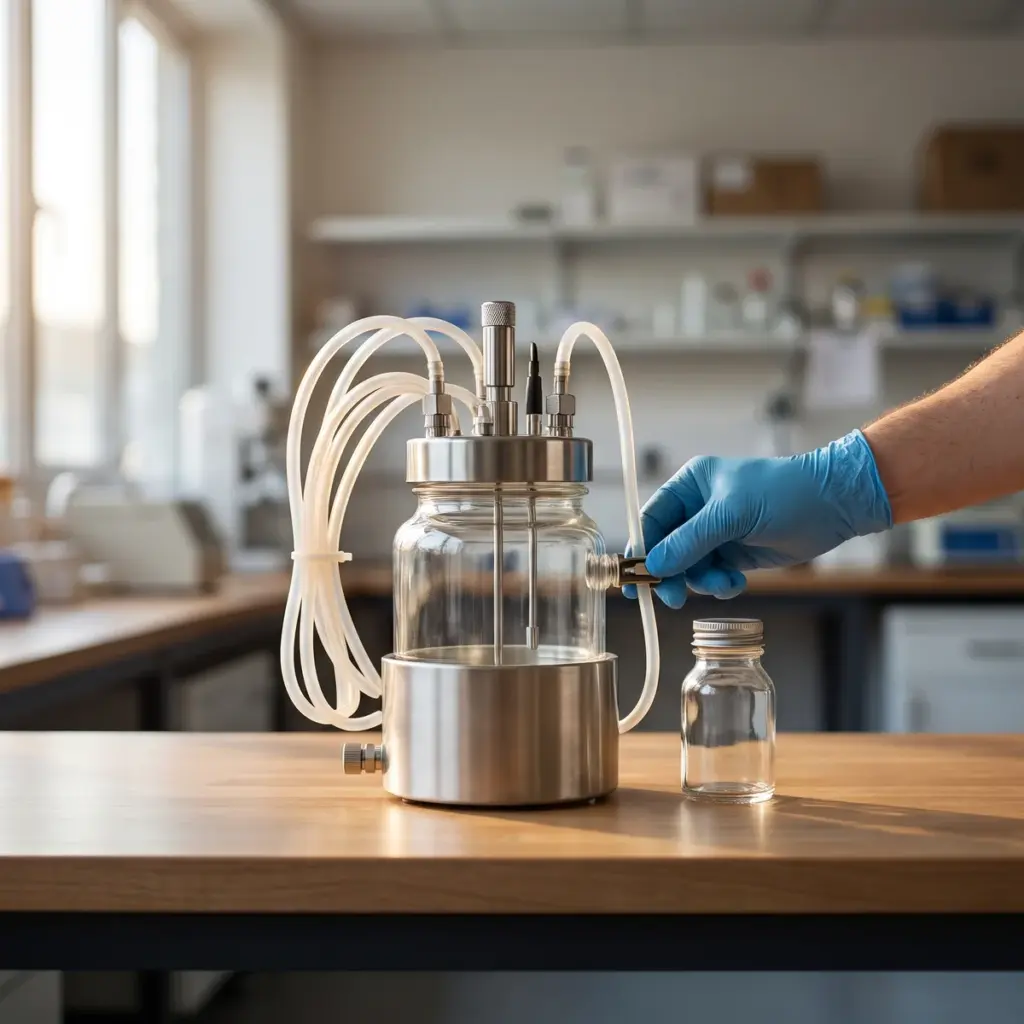
Work starts with the production organism. The laboratory screens strains for yield and, where the project allows, optimises them genetically. Fermentation moves from shake flasks to laboratory bioreactors, with pH, temperature, aeration and nutrient feed controlled and logged. Enzymatic routes use a purified enzyme in place of the living organism to convert a substrate into the target molecule.
Downstream purification and characterisation
The broth or reaction mixture is clarified, and the active is recovered by filtration, precipitation or chromatography. Molecular characterisation confirms its identity and, for polymers such as hyaluronic acid, the molecular weight distribution. Stability is then checked under conditions that reflect the intended formulation.
Skin cell models for candidate selection
Purified candidates go into cell culture. Fibroblasts are used for collagen-related endpoints, melanocytes for pigmentation pathways and keratinocytes for barrier and cytotoxicity work. Reconstructed human epidermis supports irritation and barrier studies on the most promising materials.
Process, yield and cell assay data delivered
- Process description with fermentation or biocatalysis parameters
- Yield and purity data for each run
- Characterisation and stability results
- Cell assay report with models, concentrations and endpoints
- Purified material for formulation work
Planning a biotechnology-based ingredient development project
A biological route is a long-term production choice, since the strain, the medium and the purification train become part of the ingredient’s identity. Early decisions on scale and cell testing set what the project can deliver.
Feasibility before scale-up
Most projects open with a feasibility phase that compares strains or enzymes and measures yield and purity at small scale. These figures decide whether the route can reach a commercial cost of goods. A process that gives a high-purity active in the bioreactor but needs several chromatography steps can end up more expensive than an extraction, so ask for a cost estimate at pilot scale before you commit.
Linking production batches to activity claims
Results from fibroblast, melanocyte or keratinocyte assays support a mechanism claim, such as stimulation of collagen synthesis in skin cells. Keep the material tested in each assay traceable to its production batch, so later batches can be shown to match. Once a candidate proves active, novel ingredient development builds the full specification and safety package around it.
What separates one biotechnology provider from another
Check the bioreactor volumes the laboratory runs and whether it holds the biosafety level your strain requires. If your route uses a genetically modified organism, confirm the site is authorised to work with it. For the cell work, ask which primary cells or cell lines are used and whether reconstructed epidermis models are run in-house.
More in Ingredient Production Processes
Ingredient production process services work out how to make a cosmetic active by fermentation, biotech or greener chemistry, and supply first samples.