Applicator Pick-Up & Pay-Off Testing overview
Do you provide Applicator Pick-Up & Pay-Off Testing?
How pick-up and pay-off are measured
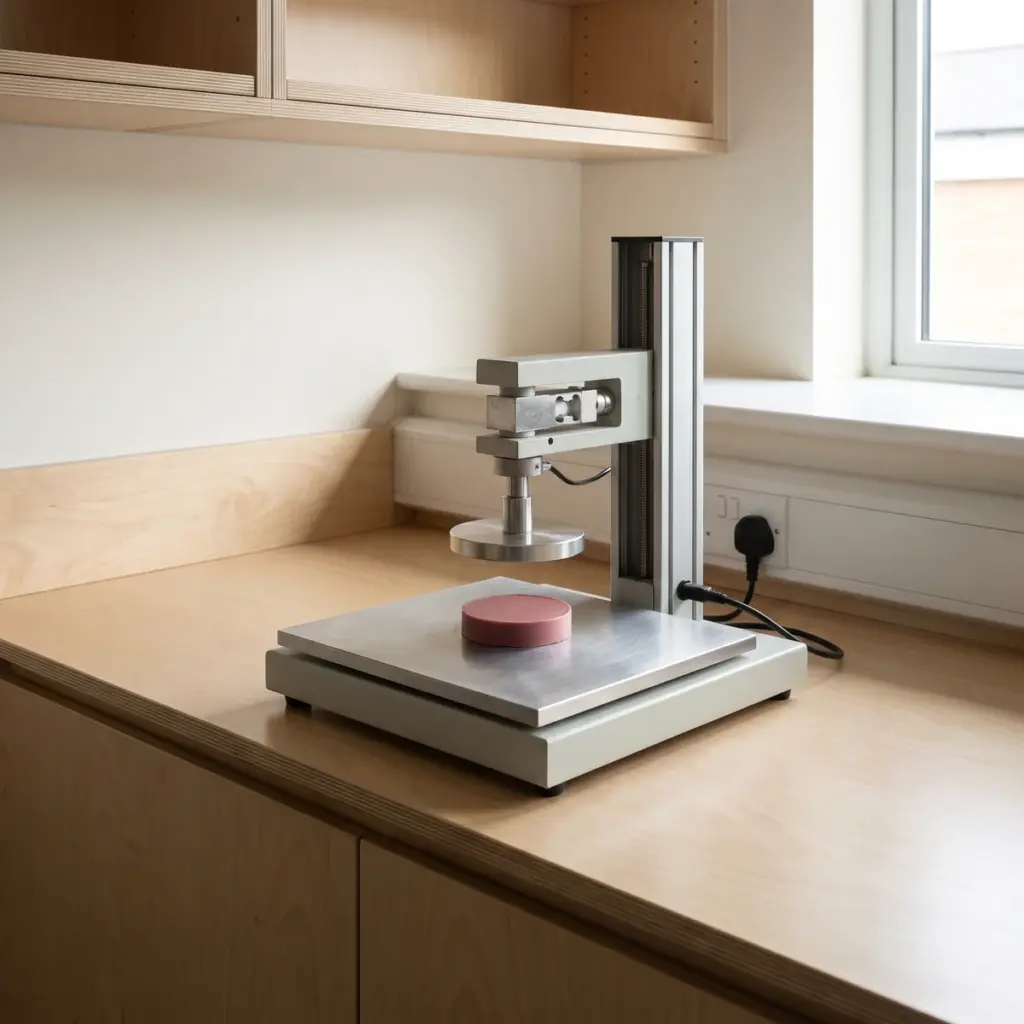
Testing separates loading from deposition, so a poor result can be traced to the formula, the applicator or the way the two interact. A controlled rig, or a trained operator following a fixed protocol, applies the same pressure, angle, stroke length and number of passes each time.
Measuring product pick-up
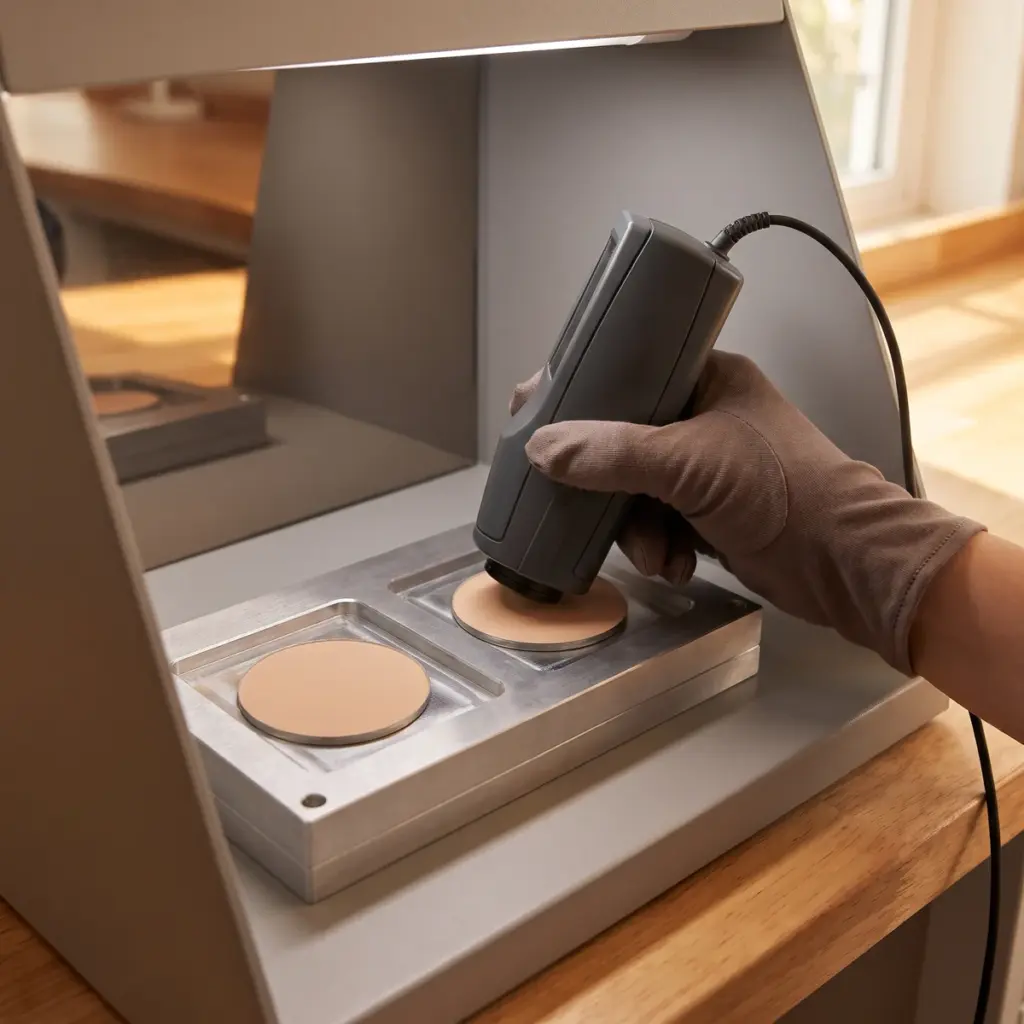
The applicator is weighed, brought into contact with the product under the set conditions and weighed again. The mass gain gives the amount collected per pass. Repeating the cycle shows whether loading stays constant or falls as a pressed powder glazes over. Observations during loading record crumbling, dusting, glazing and uneven take-up across the brush or sponge.
Measuring pay-off on a substrate
The loaded applicator is drawn across an agreed substrate, such as synthetic skin, coloured board or a textured plate, in a standard stroke pattern. Deposited mass comes from weighing the substrate or the applicator before and after. Colour intensity and evenness are read by imaging or by instrumental colour measurement at several points along the swatch.
Pick-up mass, pay-off and swatch colour endpoints
- Mass collected per pass and its variation
- Mass deposited per stroke or swatch
- Transfer ratio between pick-up and pay-off
- Colour intensity and uniformity along the swatch
- Notes and photographs of dusting, fall-out or patchiness
The report sets out the rig settings, substrate, conditioning of samples and number of replicates, so formula and applicator options can be compared on equal terms.
Choosing formulas and applicators with pick-up and pay-off data
Make-up performance depends on the formula and the applicator together, so the data is most useful when both are still open to change.
Matching an applicator to a formula
A dense synthetic brush and a loose natural-hair brush pick up very different amounts from the same eyeshadow. Testing two or three candidate applicators against the final formula shows which gives the intended intensity in one or two strokes. The same approach compares sponge densities for liquid foundation and wiper sizes for lip gloss and mascara.
Tuning pressed powders and sticks
Pressing pressure and binder level control how a powder releases. Pick-up data across a range of pressing pressures lets the manufacturer set a window that avoids both glazing and crumbling. For lipsticks and crayons, pay-off on a substrate tracks changes in wax blend and pigment load.
What to supply before testing
Send finished samples in their final pans or components, the applicators to be compared and a reference product whose pay-off you like. Tell the laboratory which skin tone or substrate colour matters, because coverage on a light substrate reads differently from coverage on a deep one.
More in Texture Colour Testing
Texture colour testing puts numbers on how a cosmetic feels, spreads, transfers from an applicator and looks, so batches can match a reference.