Instrumental Texture Testing overview
Do you provide Instrumental Texture Testing?
Texture analyser tests for cosmetic products
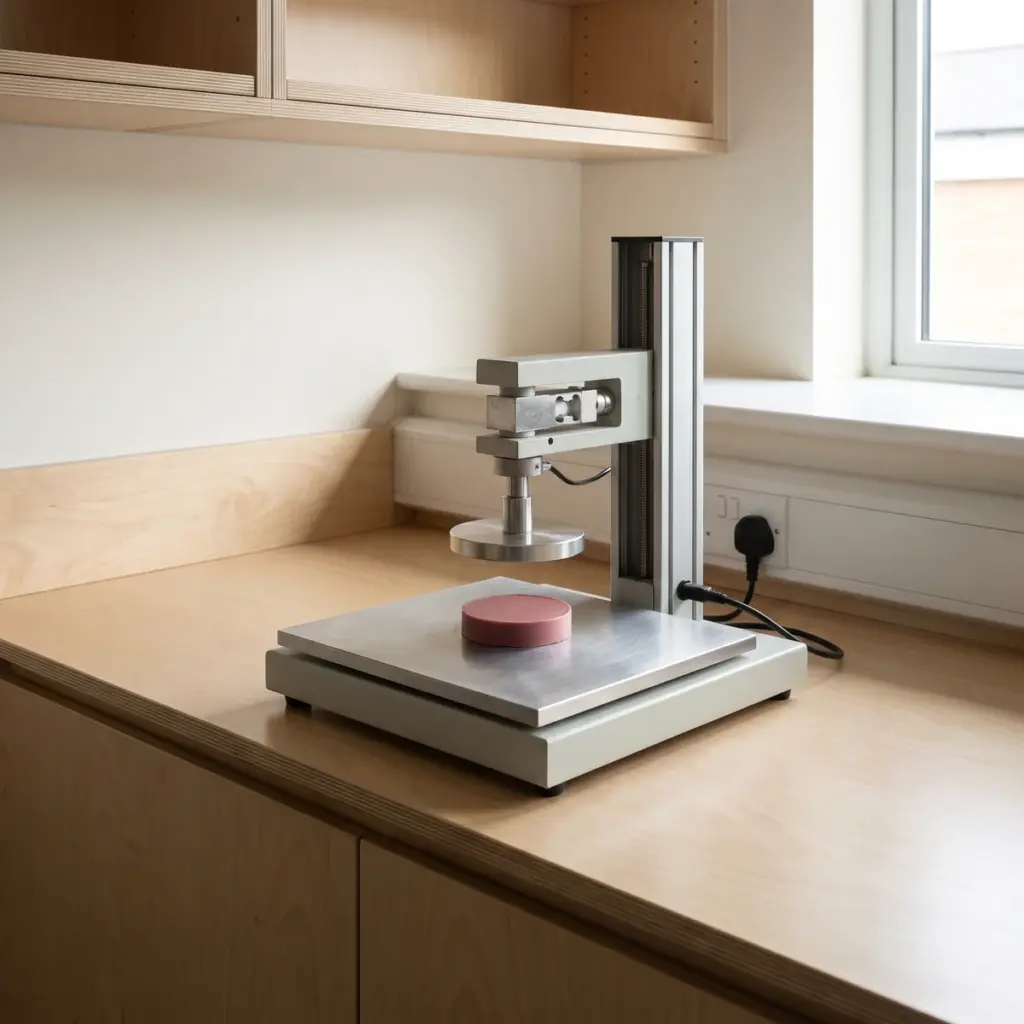
A texture analyser is a universal testing machine scaled down for soft materials. Changing the probe and the movement changes what is measured, so the method is matched to the product format.
Probe tests by product type
- Compression with a flat disc for firmness of creams and gels
- Needle or cone penetration for balms, butters and solid sticks
- Back extrusion for the consistency of semi-solids in a container
- Withdrawal tests for tack and adhesiveness
- Bending or breaking tests for lipstick bullets and pencils
Reading the force curve
Peak force gives firmness or hardness. The area under the curve on the way in gives consistency, and the negative area on withdrawal gives adhesiveness or stickiness. Breaking tests on lipsticks give the force at which a bullet snaps, which predicts breakage in use or transit. Replicate measurements on several containers give the mean and spread needed for statistical comparison.
Controlling the conditions
Results depend on probe size, test speed, penetration depth, fill level and sample temperature, and on how long the product rested after filling. The laboratory fixes and records each parameter, conditions samples at a set temperature and uses the same containers throughout a study, so results stay comparable months later.
Force curves and texture parameters per sample
You receive the force curves, a table of parameters per sample with mean and standard deviation, the full test settings and a comparison against your benchmark or specification.
Applying texture analysis in development and quality control
Texture figures give formulators, process engineers and quality teams a shared language for how a product feels in the pack.
Matching a benchmark
When a brief says the new cream should feel like an existing product, measuring both on the texture analyser gives the formulator a numerical target for firmness and stickiness. Each adjustment to waxes, thickeners or oil phase can then be checked against that target before the next sensory session. Mechanical data and panel scores together show which instrument values track the attributes your consumers notice.
Scale-up and stick products
Lipsticks, balms and solid sticks are sensitive to cooling rate, so a production batch can come out harder or more brittle than the lab batch. Penetration and breaking tests on samples from the first production run show whether the process needs adjusting. The same tests at stability time points show whether sticks soften, sweat or harden in storage.
Setting release limits
Texture data from several approved batches gives the range for a firmness specification. Write the probe, speed, depth and temperature into the specification so the manufacturer measures the same way. Where the issue is how the product moves across skin, add spreadability testing to the programme.
More in Texture Colour Testing
Texture colour testing puts numbers on how a cosmetic feels, spreads, transfers from an applicator and looks, so batches can match a reference.