Formula optimisation


Formula optimisation overview
Who provides Formula optimisation
Companies providing Formula optimisation
Methods behind cosmetic formula optimisation
Optimisation works inside the existing product concept. The ingredient list may change slightly, but the product type, positioning and most raw materials stay in place.
Baseline review of the current formula
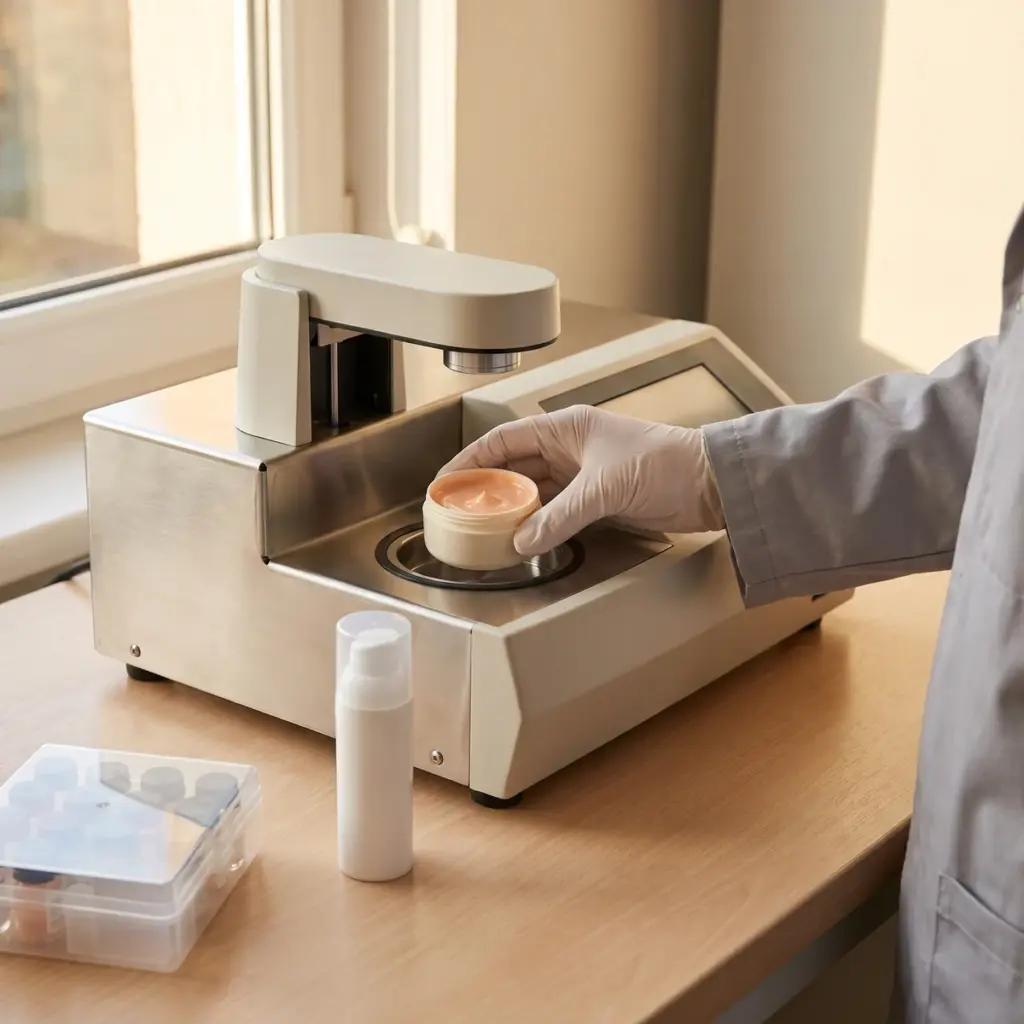
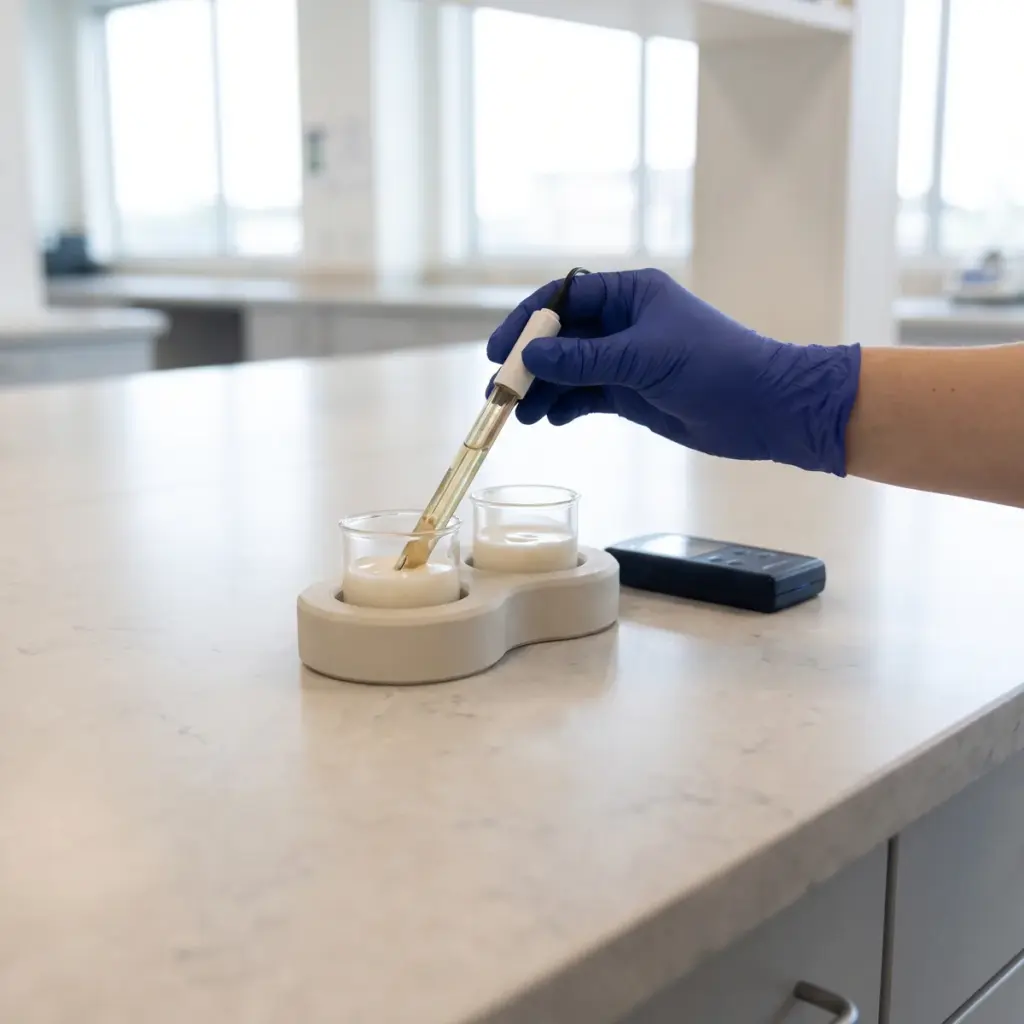
The formulator reads the quantitative formula, the processing instructions and the existing test data, then measures retained samples to set a baseline for pH, viscosity, appearance and skin feel. Ingredient interactions are mapped, for example a polymer that loses viscosity in the presence of electrolytes or an active that degrades at the current pH.
Designed trials
Changes are planned so that each one can be traced. For a single issue the formulator varies one ingredient or one process step at a time. For several linked properties, such as viscosity, skin feel and cost, a design-of-experiments approach tests combinations of levels in a planned matrix and maps how each factor moves the result. Typical levers include:
- Emollient and emulsifier choice for sensory profile
- Thickener type and level for viscosity and stability
- Active level, pH and delivery vehicle
- Process temperature, shear and order of addition
- Lower-cost raw material grades with equivalent function
Comparative testing and the optimisation report
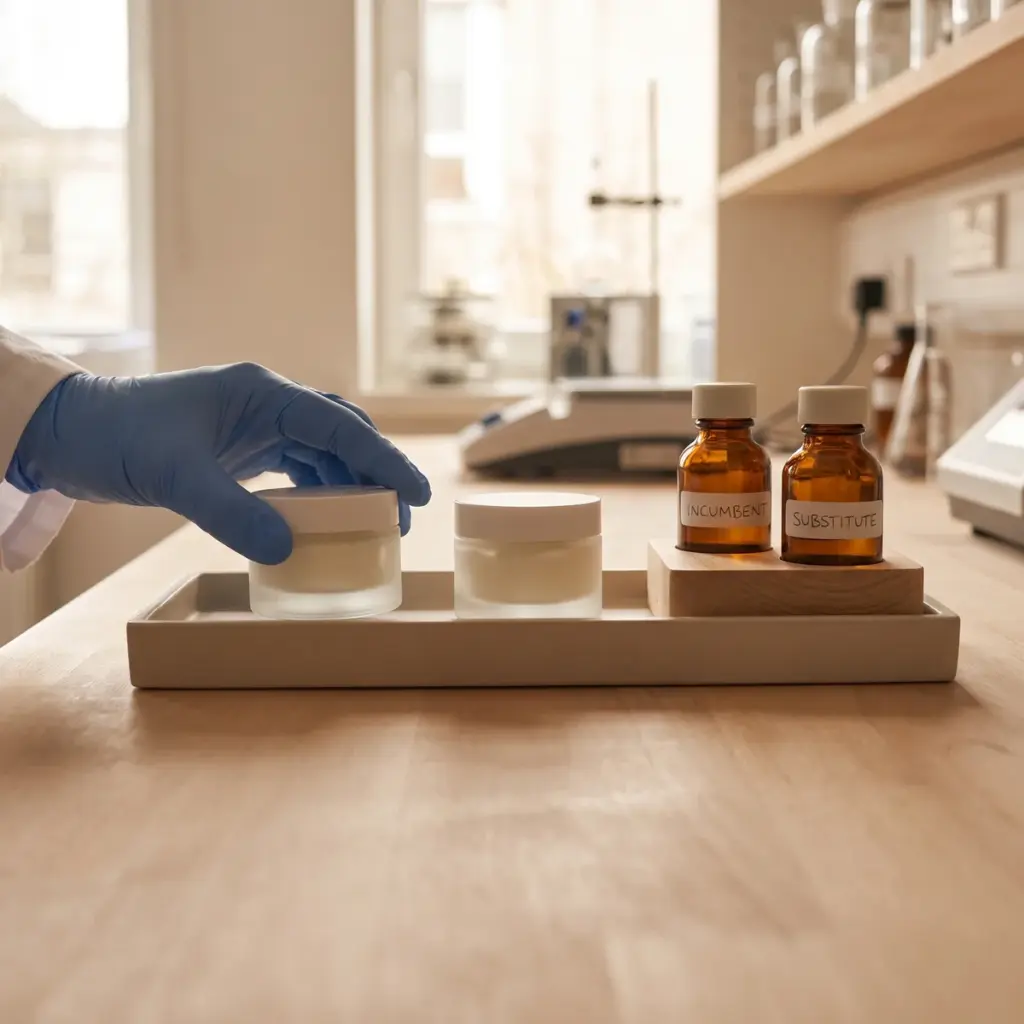
Trial batches go through short accelerated storage and are compared with the original on the same measurements. The report records every change, the reason for it and the resulting data, and names the recommended version together with the stability and preservation checks it should pass before it replaces the current formula.
When formula optimisation pays off
Optimisation is the right tool when the product concept is sound and one or two properties need work.
Fixing a defined weakness
Optimisation suits problems you can describe and measure. Viscosity dropping after some months on the shelf, a greasy finish in consumer feedback, a serum that yellows in a clear bottle: each points the formulator to a specific part of the formula. Send the complaint data and affected batches with the brief.
Cost reduction without a visible change
Brands often optimise to protect margin. The formulator looks for lower-cost grades with the same function, simpler processing or a reduced number of raw materials. Agree in advance which properties must match the original, and ask for a blind in-use comparison before approving the cheaper version.
Optimisation or a larger rework
When the change touches only levels, grades or process, optimisation is the efficient route. When ingredients have to be removed or swapped for regulatory or sourcing reasons, cosmetic reformulation and ingredient substitution is the better fit. If the weakness is microbiological, start with preservative system optimisation. Any optimised formula needs fresh stability data, and a new challenge test if the water phase, pH or preservative has moved.
More in Formula Improvement
Cosmetic formula optimisation and reformulation services fix, adapt or update an existing formula when performance, sourcing or preservation needs change.