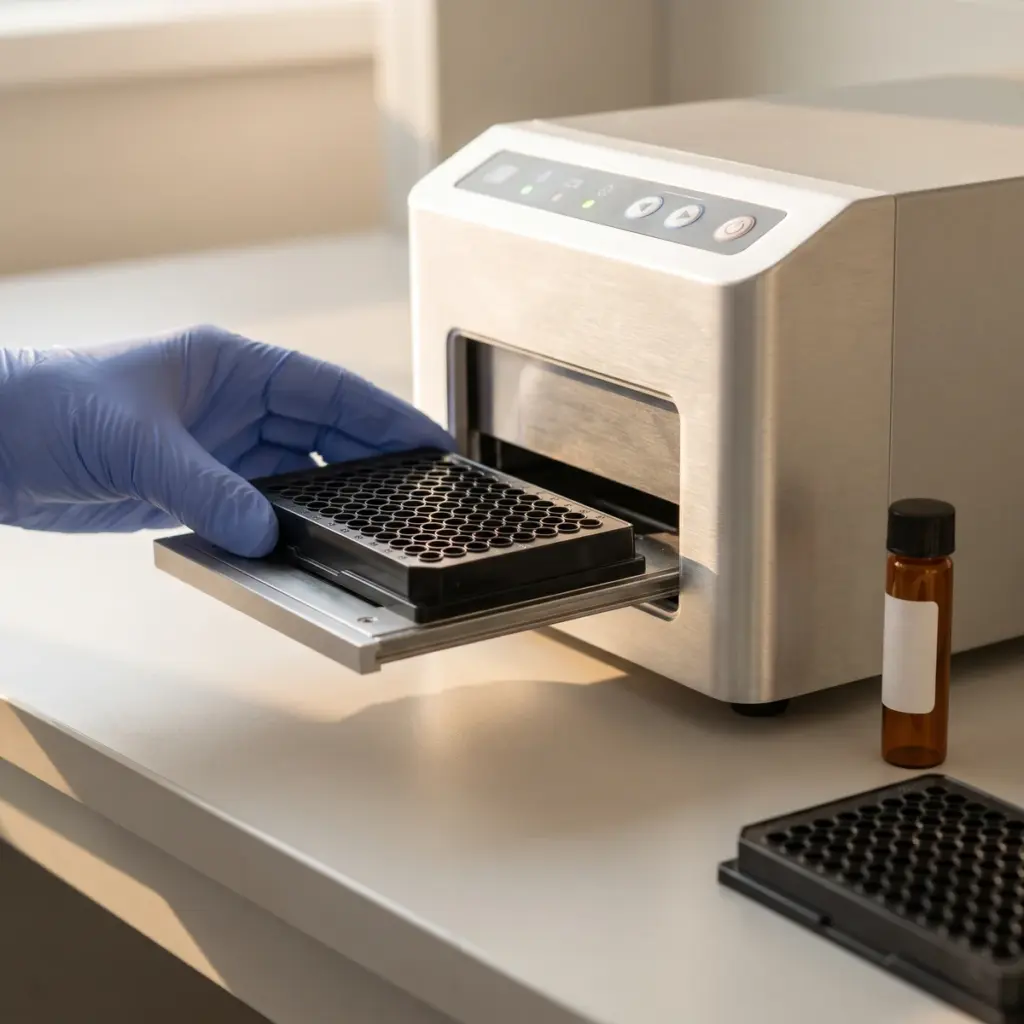
Biological Pathway Investigation overview
Do you provide Biological Pathway Investigation?
How a biological pathway investigation maps an ingredient’s mechanism
The investigation begins with a single question, for example how an extract increases procollagen I in dermal fibroblasts or how a peptide lowers melanin in melanocytes. The laboratory designs a study around that response, choosing the cell type, concentrations and sampling times that show the cascade unfolding.
Molecular techniques used to trace the pathway
Several layers of measurement are combined so that each step of the pathway has its own evidence.
- RNA sequencing or targeted qPCR for gene expression
- Western blotting for protein levels and phosphorylation states
- Immunofluorescence imaging to locate proteins within the cell
- Metabolomics for downstream biochemical changes
Time-course sampling shows the order of events, with early signalling changes followed by gene expression and then protein output. Concentration series link the size of each change to the dose.
Testing whether a pathway drives the response
Once a candidate route is mapped, targeted experiments check that it carries the effect. The laboratory blocks a node with a specific inhibitor or silences a gene, then measures whether the original response falls. A pathway that passes this test becomes the core of the mechanism.
Pathway diagrams and the study report
You receive annotated pathway diagrams, statistical analysis of each dataset and a written interpretation that links the findings to the starting hypothesis. The report distinguishes transcript changes from measured protein activity and functional effects, so each part of the mechanism is backed by the right type of data. Figures are supplied in a form you can reuse in a scientific dossier.
Where biological pathway investigation fits in active development
A pathway investigation is usually commissioned for one lead active whose effect has already been reproduced.
Building the mechanism section of a technical dossier
Ingredient monographs and customer presentations carry more weight when the mode of action is shown step by step. A pathway investigation supplies the diagrams and data for that section and gives sales teams a defensible explanation of how the active works in skin cells.
Planning human studies from the mechanism
Mechanism data tell you which endpoints to measure on volunteers. A collagen pathway points towards firmness and wrinkle assessments, while a barrier route through lipid-synthesis enzymes or ceramide composition in epidermal models points towards transepidermal water loss and hydration measurements in a clinical study. The concentrations that drove the pathway also guide the dose chosen for the finished formula.
Pathway investigation or pathway analysis
If you have several candidates and want to see which pathways each one touches, start with broader biological pathway analysis. Commission a full investigation once one ingredient and one response are worth explaining in depth. If the work points to a single receptor, follow up with receptor binding studies.
More in Mechanism Investigation
Mechanism investigation identifies the molecular targets, receptors and pathways a cosmetic active works through, using cell and molecular methods.