Receptor Binding Studies overview
Do you provide Receptor Binding Studies?
Measuring receptor affinity, selectivity and signalling
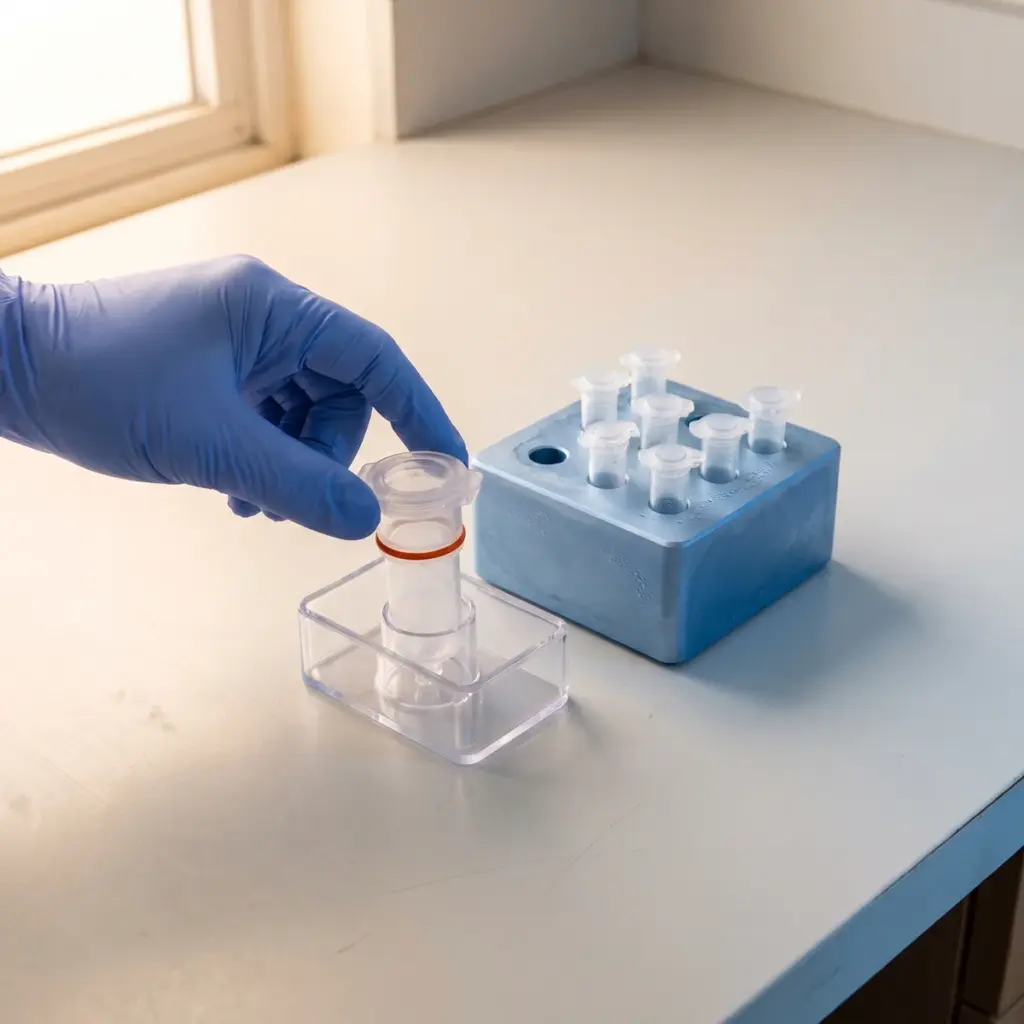
A binding study starts from a named receptor and a hypothesis, for example that a peptide engages a growth factor receptor on fibroblasts or that a lipid ligand binds a PPAR isoform in keratinocytes. The laboratory sources or expresses the receptor, selects a reference ligand and validates the assay with known controls before testing your material.
Binding assay formats
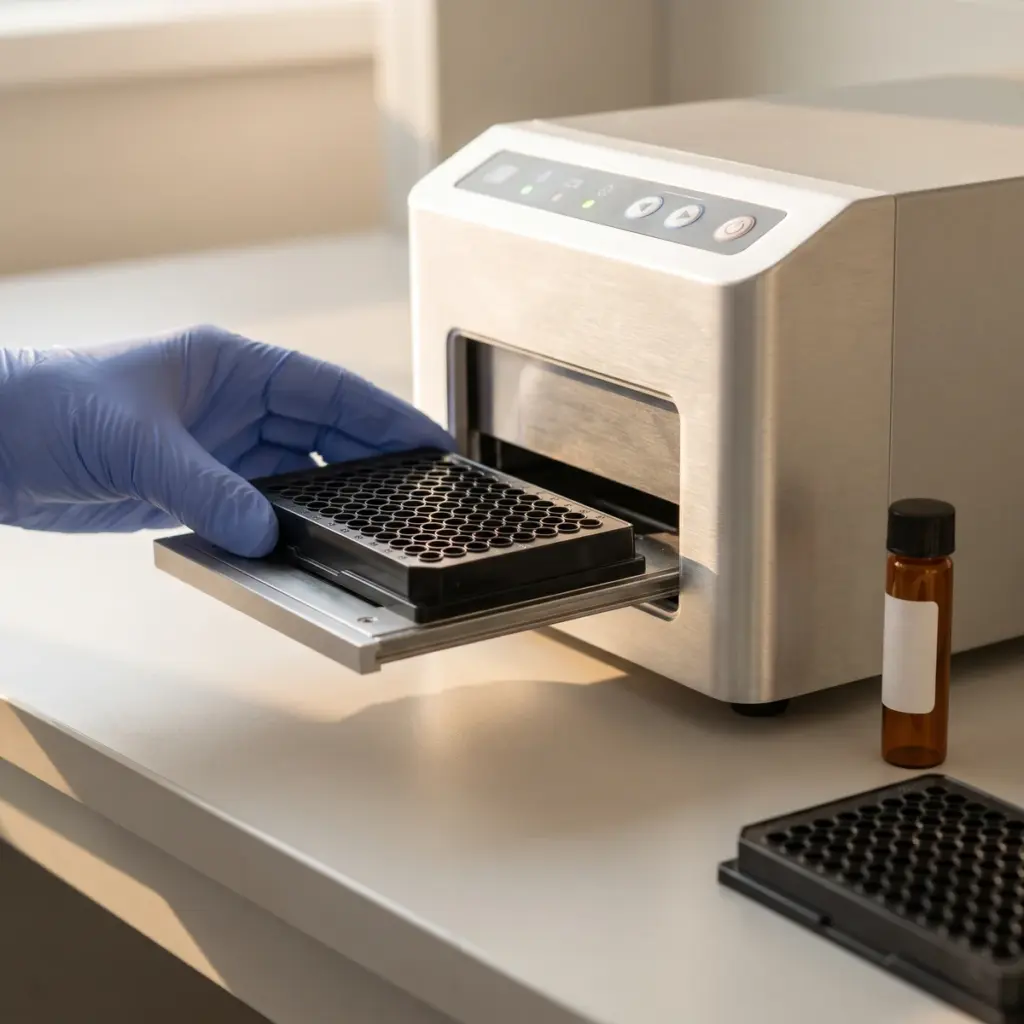
The format depends on the receptor and the test compound. Radioligand binding remains common for membrane receptors. Fluorescence polarisation and other fluorescence-based formats suit soluble receptor domains, and label-free surface methods give real-time kinetic traces. Typical measurements include:
- Competitive displacement of a known ligand across a concentration range
- Dissociation constant (Kd) from saturation or kinetic experiments
- Association and dissociation rates
- Selectivity against a panel of related receptors
- Signs of allosteric binding at a secondary site
A competition assay yields an IC50 that is specific to its conditions. Where the reference ligand’s affinity is known, the laboratory can convert it to an inhibition constant for comparison between assays.
Functional readouts after receptor engagement
Functional assays show what binding does inside the cell. Depending on the receptor family, endpoints include cAMP or cGMP accumulation, calcium flux, protein phosphorylation and reporter gene activity. Agonist and antagonist modes tell you whether the ingredient activates the receptor or blocks the natural ligand.
Data package
The report states the receptor source, ligand, controls, concentrations and fitting model, and gives affinity and kinetic constants with their confidence intervals. Concentration-response curves, selectivity tables and raw plate data are supplied for your own analysis.
Using receptor binding data in an ingredient programme
Binding data answer a narrow question with numbers, which makes them easy to use in technical and commercial documents.
Supporting a mechanism claim
An affinity constant and a matching functional result give a supplier concrete figures for an ingredient monograph, a mode-of-action slide or a scientific publication. Selectivity data answer the question formulators often ask first: does the active hit only the intended receptor, or several in the same family.
Ranking candidates during optimisation
When a programme produces a series of peptides, analogues or fractions, binding data rank them quickly and cheaply before cell or tissue work. Kinetic data add a second filter, since a slow off-rate can matter as much as raw affinity.
Choosing a binding laboratory
Ask whether the provider already runs a validated assay for your receptor or would need to develop one, as assay development adds time and cost. Check the receptor source (human recombinant or other species) and whether the laboratory can run binding and functional assays in-house so that both datasets come from the same material lot. If the target is still uncertain, start with molecular target identification before committing to a binding study.
More in Mechanism Investigation
Mechanism investigation identifies the molecular targets, receptors and pathways a cosmetic active works through, using cell and molecular methods.