Active compound detection

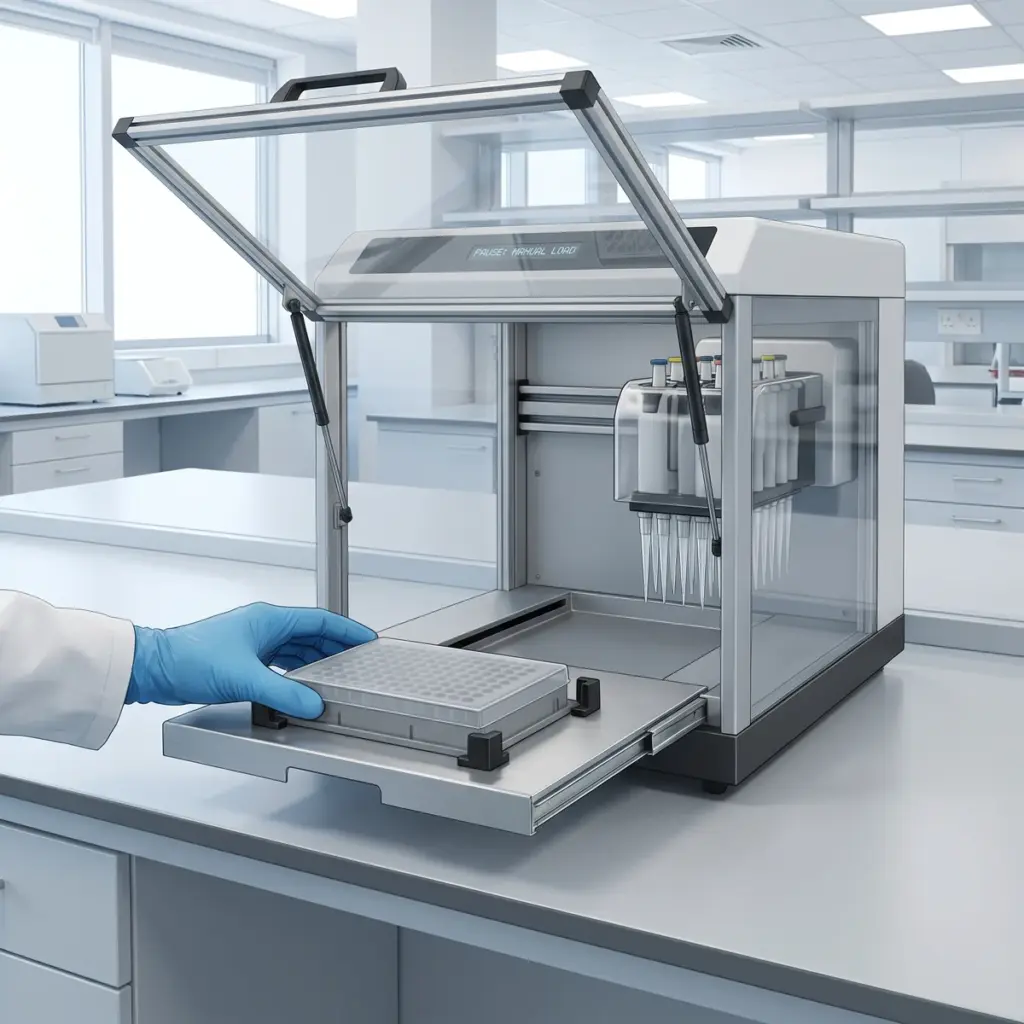
Active compound detection overview
Who provides Active compound detection
Companies providing Active compound detection

How active compound detection finds and confirms hits
Active compound detection searches a candidate set for biological activity that matches a cosmetic development goal. Automated assays compare many materials under one set of conditions and return a first pass of hits, a starting point for the confirmation that follows.
Automated screening
Robotic sample handling and automated readout let the laboratory test a large panel against the same endpoints. The endpoints are chosen to fit the research question:
- Antioxidant activity
- Collagen synthesis and related markers
- Inflammatory response markers
- Antimicrobial activity against selected organisms
Controls and repeat reads separate a true response from background signal, the colour of an extract or other interference.
Confirming a hit
Promising candidates move into follow-up work such as skin-cell cultures, dose-response analysis and mechanism studies. The laboratory repeats the first assay with the right controls, maps concentration-dependent activity against cytotoxicity, and confirms the response with a second, independent method. Cell viability is measured throughout, because a drop in cellular activity can look like a desirable inhibitory effect. A hit that survives these checks is assessed for stability and fit for the next formulation step, and can then feed structure-activity analysis or prototype formulation work.
Data delivered for each hit
The report lists every confirmed hit with its potency value, such as an IC50 or EC50, the concentration range tested, the viability data and the controls used. Raw plate data are supplied so your team can re-analyse the screen.
From an activity screen to a working shortlist
Automated assays can compare extracts, peptides or other compounds for antioxidant activity, a collagen-related response or inhibition of selected microorganisms. Match the assay and the reference material to the development question, because a coloured extract, assay interference or reduced cell survival can imitate useful activity.
Confirming the hits
Repeat testing, a concentration-response curve and a second method separate a reproducible response from an initial signal. An antimicrobial screen reports a minimum inhibitory concentration for each named strain, which lets you compare candidates on potency.
What a good shortlist records
A useful shortlist lists the tested material, the endpoint, the controls and the reason each candidate was prioritised. Confirmed actives then move into formulation compatibility work and safety testing. When you ask for a quote, state the number of samples, their form and solvent and the endpoints you want, since these set the plate layout and the schedule. Send a reference active you already know, so the laboratory can benchmark each new candidate against it.
More in Ingredient Candidate Screening
Cosmetic ingredient screening tests and ranks candidate actives in laboratory assays or computer models to pick the few worth developing further.