Skin Barrier Efficacy Testing overview
Do you provide Skin Barrier Efficacy Testing?
Measuring skin barrier function with TEWL and challenge models
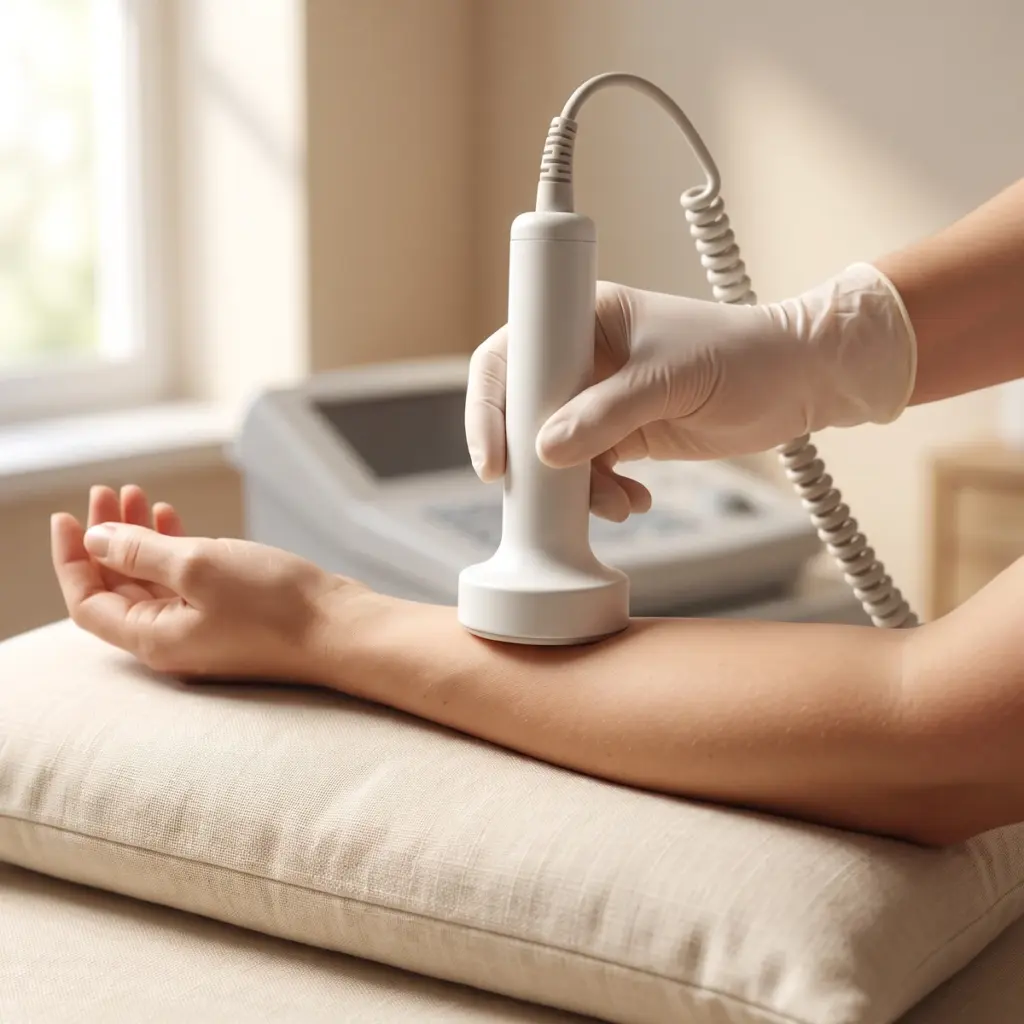
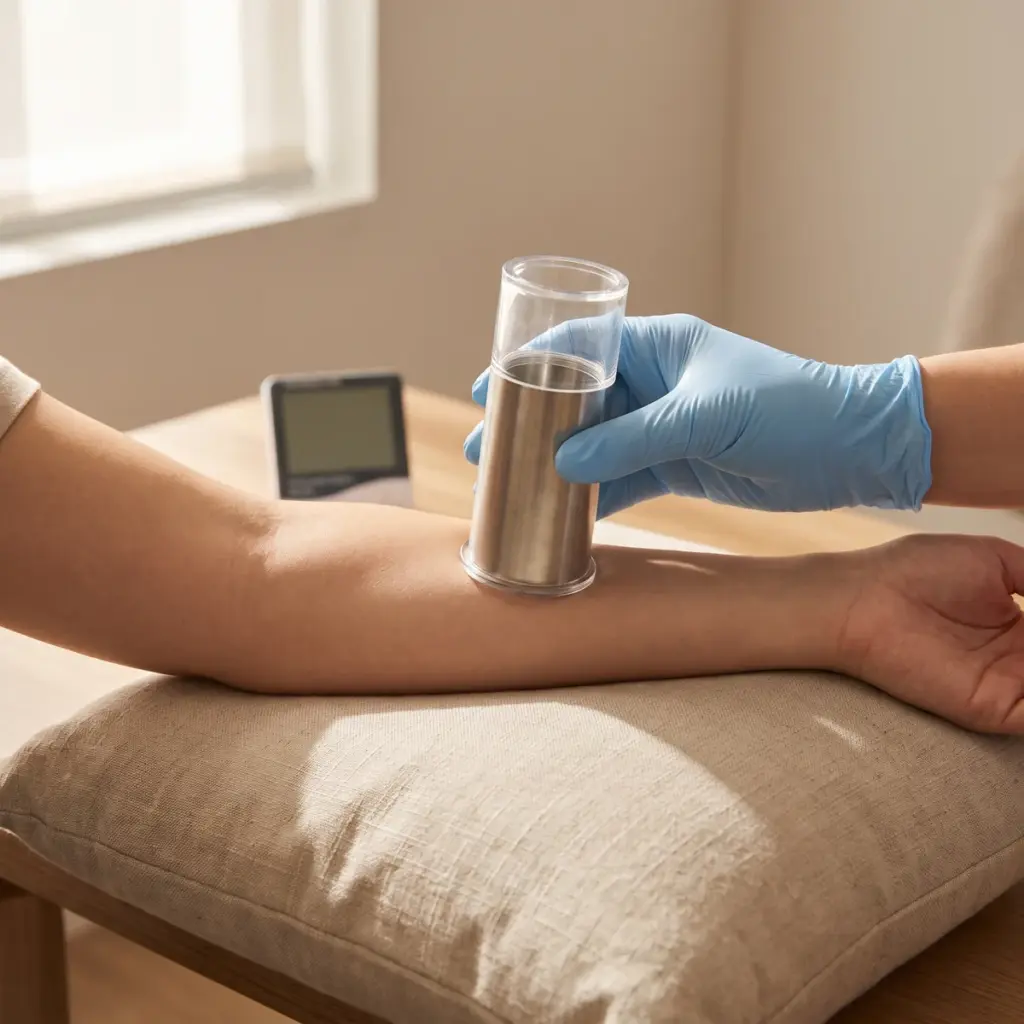
An intact stratum corneum limits the water that diffuses out through the skin. When the barrier is weakened, that passive loss rises. Barrier efficacy studies quantify it with an evaporimeter, an open or closed chamber probe that records water vapour flux at the skin surface. Readings follow a period of acclimatisation in a room at controlled temperature and humidity, since sweating, air movement and probe pressure all change the value.
Use studies and barrier challenge designs
In a use study, volunteers apply the product over a set period and TEWL is compared with baseline and with an untreated or vehicle-treated site. In a challenge study, the barrier is first disrupted in a controlled way, by repeated tape stripping or a mild surfactant exposure such as sodium lauryl sulfate. The investigator then compares how quickly TEWL returns towards baseline on treated and untreated sites. Challenge protocols pass a safety review before anyone is enrolled. Split-site, split-face and parallel-group designs are all in common use.
TEWL, corneometry and skin pH endpoints
- TEWL at baseline and after product use
- Barrier recovery after tape stripping or surfactant challenge
- Stratum corneum hydration by corneometry
- Skin surface pH
- Clinical scoring of dryness and redness
TEWL values, panel data and claim conclusions reported
The report sets out the protocol, panel, environmental conditions, individual and mean values, change versus control and the statistical tests used, with a conclusion for each claim tested. Raw data files are usually available on request for your claims dossier.
Using skin barrier efficacy testing for product claims
Barrier data carry the most weight when the study design is chosen around the exact claim.
Claims a barrier study can support
A fall in TEWL after repeated use supports wording such as ‘reinforces the skin barrier’ or ‘reduces water loss through the skin’. A faster return to baseline after tape stripping or surfactant challenge supports claims that a product helps the barrier recover. Recruit the panel around the skin type named in the claim, for example dry or sensitive skin, and pair TEWL with hydration data when the product is sold on both benefits.
What to check in a testing provider
TEWL is one of the most environment-sensitive measurements in skin testing. Ask how the laboratory controls room temperature and humidity, how long volunteers acclimatise and whether one operator takes all readings for a given study. Ask which evaporimeter type they use and whether they have run your chosen challenge model before. For surfactant or tape-stripping protocols, confirm that a physician or qualified safety assessor signs off the design.
Adding mechanism data
Ingredient suppliers often back a clinical TEWL result with laboratory work on ceramides, filaggrin or tight junctions. Barrier & hydration mechanism studies supply that cell-level explanation, and skin hydration efficacy testing covers the moisture side of the product claim.
More in Hydration Barrier Testing
Skin hydration and barrier efficacy testing measures moisturisation and water loss on volunteers, with lab studies of the lipids behind the effect.