Skin Hydration Efficacy Testing overview
Do you provide Skin Hydration Efficacy Testing?
How a skin hydration efficacy study is run
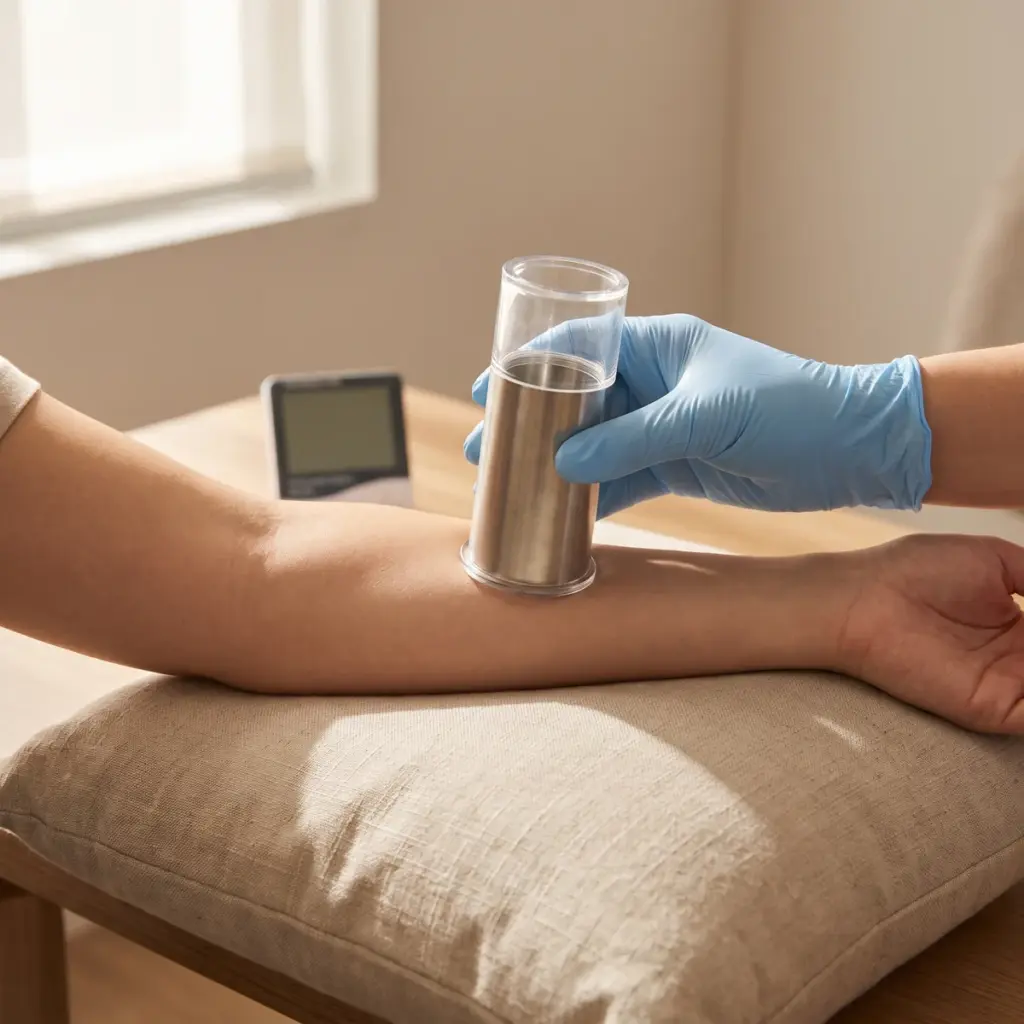
Hydration studies take place on the forearm, lower leg or face of healthy volunteers who meet the inclusion criteria for the claim, for example adults with dry skin. Participants stop using moisturisers on the test areas for a washout period before the study. Before every measurement they rest in a controlled room, because temperature, humidity and recent activity all shift the readings.
Instruments and measured endpoints
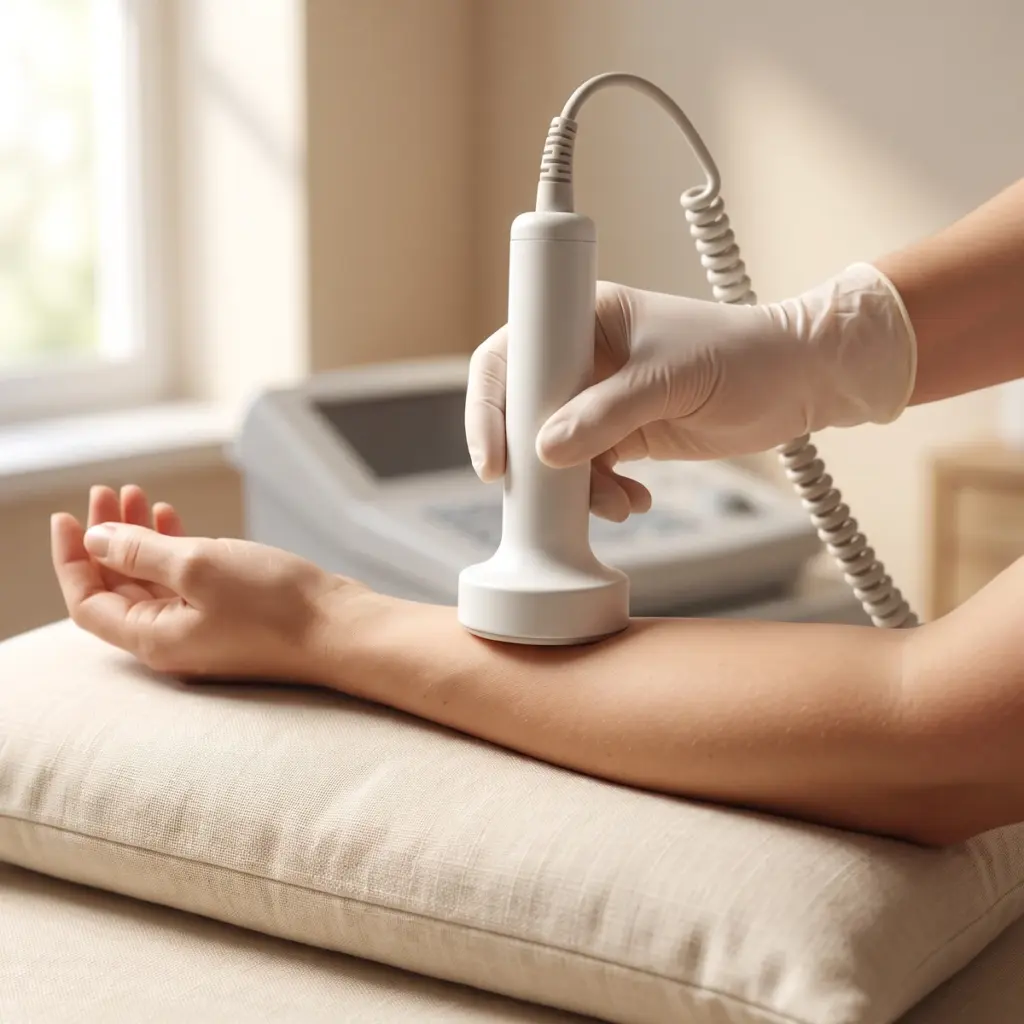
Capacitance probes are the standard tool. They read the dielectric properties of the upper stratum corneum, which rise with water content, and report results in arbitrary units. Conductance devices give a second instrumental view of surface hydration. Many protocols add transepidermal water loss (TEWL) by evaporimetry, which shows how much water the skin gives off, along with a participant questionnaire on skin feel.
Single-application and repeated-use designs
A kinetic study applies the product once and measures at fixed points up to the longest duration you want to claim. A repeated-use study follows home application over days or weeks and can include a regression phase after the product is stopped, which shows how long the effect persists. Each treated site is compared with its own baseline and with an untreated site, a vehicle or a reference moisturiser, with sites randomised to avoid position effects.
Hydration readings and statistics per timepoint
- Protocol, panel description and inclusion criteria
- Measurement timepoints and individual readings
- Mean change from baseline and versus the control site
- Statistical analysis and significance at each timepoint
- Conclusion for each claim tested
Turning skin hydration efficacy testing into moisturising claims
Write the claim before the protocol. An instant hydration claim needs a reading soon after application. A long-lasting claim needs a single-application kinetic that runs to the stated hour. A claim about how skin feels after weeks of use needs a repeated-use study with a self-assessment questionnaire. Percentage claims, such as an average increase in hydration, come straight from the instrumental data, so ask for the calculation basis to be stated in the report.
Product, application routine and comparator to specify
Send the finished product, the application amount and frequency, the target skin type and the claims you plan to make in each market. Say which comparator you want: an untreated site, the placebo vehicle, your current product or a market reference. These choices set the panel size and the number of visits, and they drive the quote.
Pairing hydration with barrier data
Capacitance shows how much water the outer skin holds. If you also want to talk about barrier strength, add evaporimetry to the protocol or commission a separate skin barrier efficacy study. For a new active ingredient, laboratory work from barrier & hydration mechanisms can explain the clinical result at cell level, for example through NMF or aquaporin endpoints.
More in Hydration Barrier Testing
Skin hydration and barrier efficacy testing measures moisturisation and water loss on volunteers, with lab studies of the lipids behind the effect.