Counterfeit Monitoring overview
Do you provide Counterfeit Monitoring?
How counterfeit monitoring finds and authenticates fake cosmetics
A monitoring programme runs in cycles: detection, verification, evidence and response. The scope sets which channels, countries and products are watched and how often.
Detecting suspect listings
Analysts and automated tools scan marketplaces, social media shops and price comparison sites for your marks and product images. They flag listings with prices far below your trade price, sellers outside your authorised network, altered packaging, impossible stock levels or ship-from locations outside your distribution map. Each flagged listing is captured with screenshots, seller details and the date.
Test purchases and comparison with genuine stock
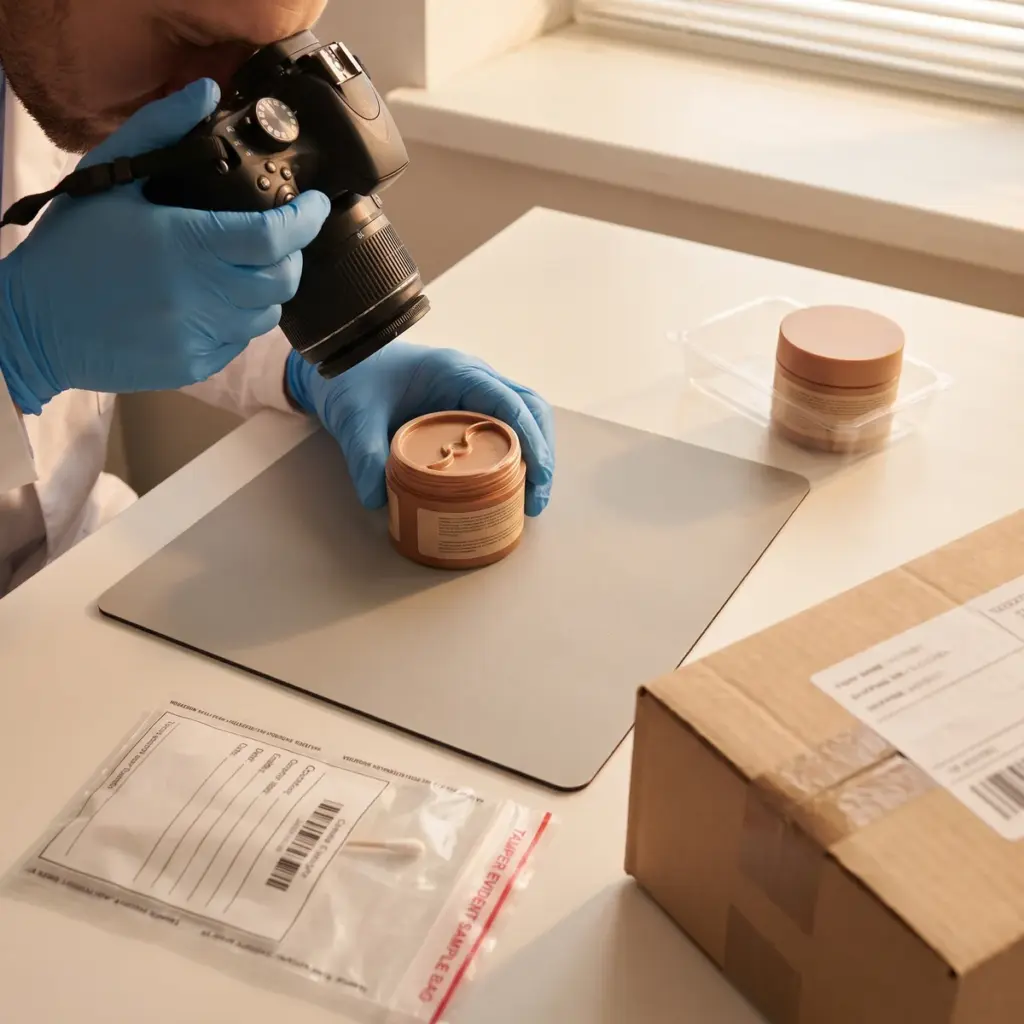
Investigators buy suspect units and record the chain of custody from order to laboratory. Each unit is checked against reference samples from your production:
- Carton and label print, fonts, colours and finish
- Batch codes, expiry dates and serial or QR records
- Closures, components and fill weight
- Product appearance, odour and texture
- Chemical fingerprint of the formula
Laboratory authentication
Chemical comparison shows whether the contents match your formula. GC-MS compares fragrance and other volatile profiles, FTIR gives a quick spectral fingerprint, and microscopy documents differences in print and materials. Some laboratories also screen suspect units for contaminants, which matters when fakes put consumers at risk.
Monitoring deliverables
You receive a case file for each confirmed fake with listing captures, purchase records, comparison images and laboratory results, plus a periodic report showing volumes, channels, repeat sellers and takedown outcomes.
Running a counterfeit monitoring programme for a beauty brand
The programme depends on the reference material behind it and on a defined route from evidence to action.
What to prepare before monitoring starts
Monitoring depends on the rights and reference material you can supply. Gather registration certificates for your trademarks and designs in the watched countries, a list of authorised distributors and retailers, current packaging specifications and retained samples from recent batches. If these are incomplete, a beauty brand protection strategy identifies what to file and collect first.
Turning evidence into action
Confirmed cases feed platform notice-and-takedown procedures, customs recordals that let border officers detain suspect shipments, and civil or criminal action against large sellers. The laboratory report and chain-of-custody record give your lawyers and the platform the technical proof that a unit did not come from your production.
What to look for in a monitoring provider
Check which marketplaces and countries the provider covers, including regional platforms where your products sell. Ask whether it runs test purchases itself and which laboratory performs the authentication, and whether that laboratory has GC-MS and FTIR methods set up for cosmetic matrices. Agree reporting frequency and the escalation route for cases that need legal action.
More in IP Portfolio Management
IP portfolio management keeps a cosmetic brand’s trademarks, patents, designs and know-how records up to date, with renewals and ownership tracked.