Dark-Spot & Skin-Tone Efficacy Testing overview
Do you provide Dark-Spot & Skin-Tone Efficacy Testing?
How Dark-Spot & Skin-Tone Efficacy Testing is run
Volunteers use the product at home for the study period and return to the clinic at fixed intervals. Each visit repeats the baseline measurements at the same sites, under the same lighting, after the same acclimatisation time in a temperature and humidity controlled room.
Spot-level and whole-face measurements
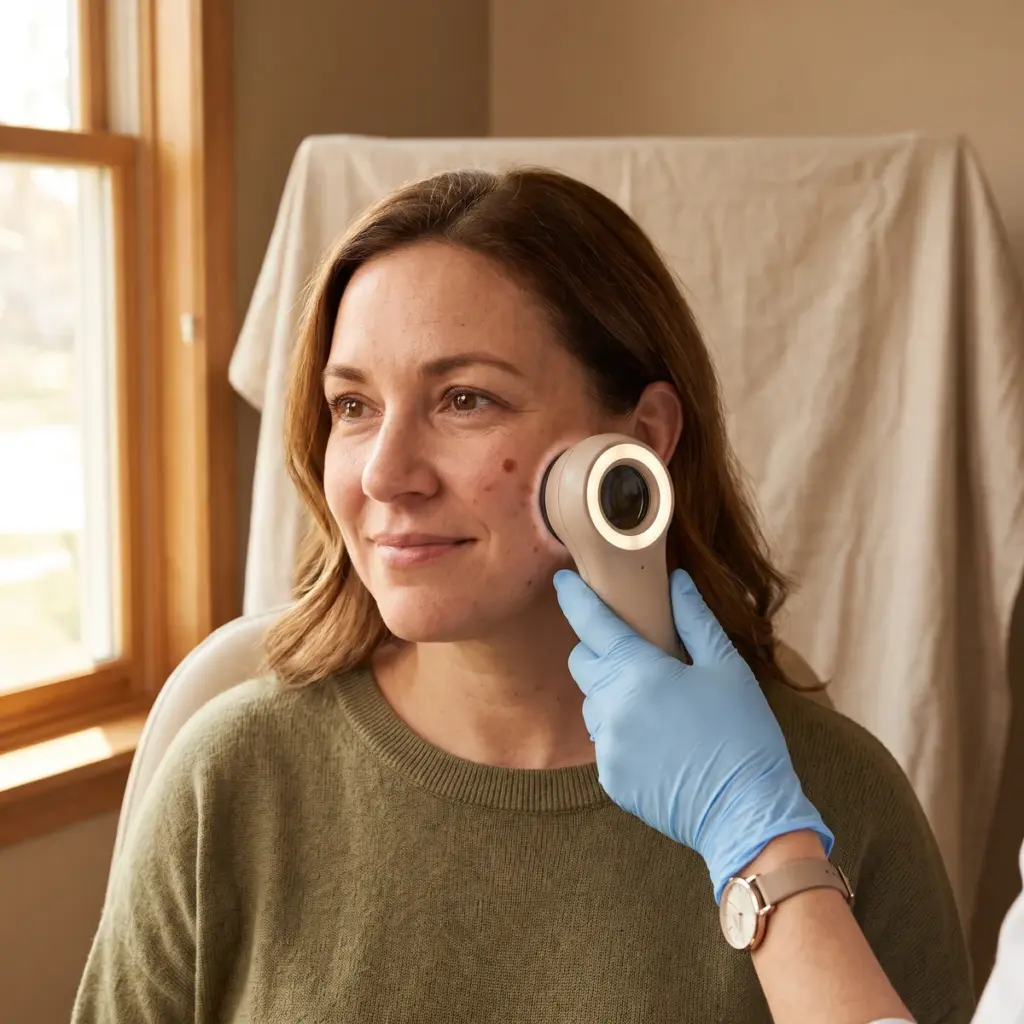
For a dark-spot claim, target spots are chosen and mapped at baseline so the same spots are measured at every visit. Contrast between the spot and the skin around it is the main readout. For a skin-tone claim, the analysis covers a defined zone such as the cheek and measures how uniform colour is across it.
- Melanin index on the spot and adjacent skin
- L* lightness and ITA colour angle
- Spot area and spot-to-skin contrast from images
- Tone uniformity from image analysis
- Clinical grading of spot intensity
- Volunteer self-assessment questionnaire
Panel and study design
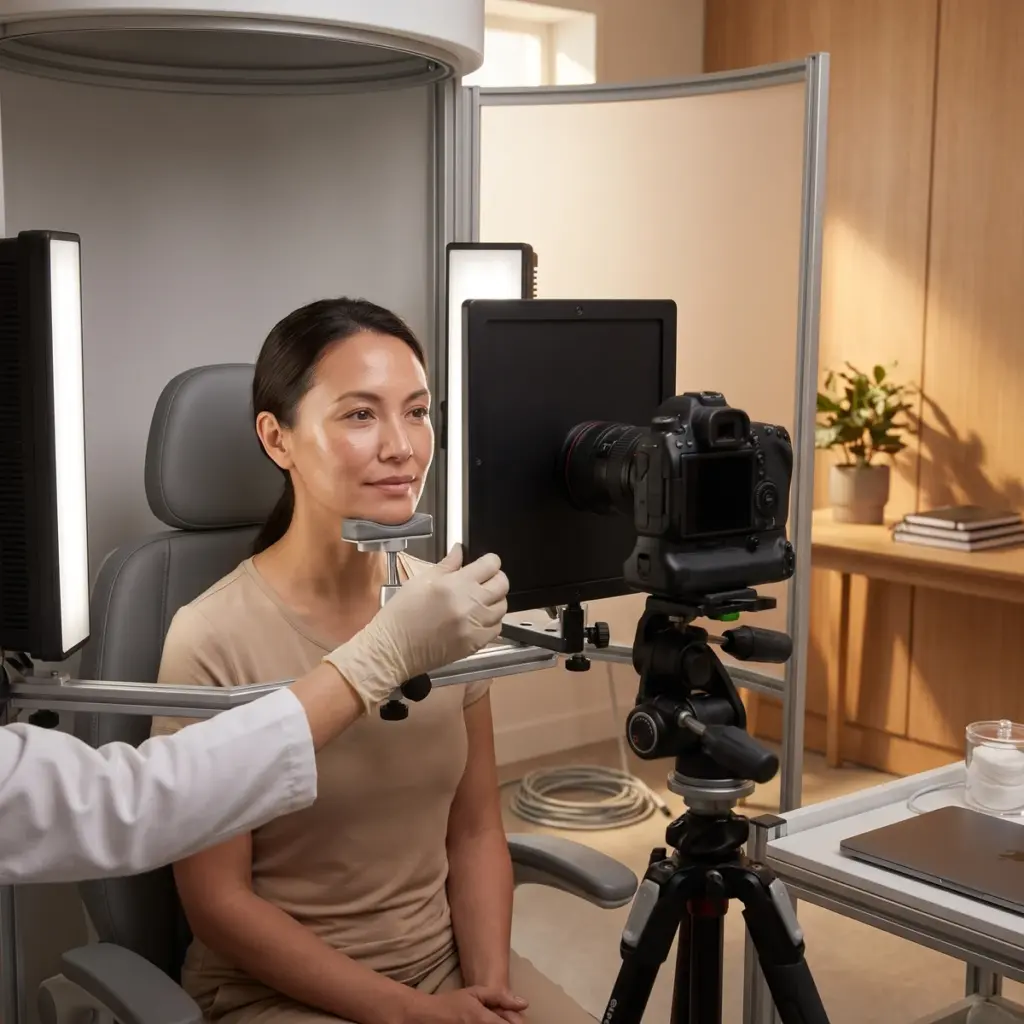
Volunteers are recruited for the concern being claimed, such as age spots, post-blemish marks or uneven tone, and across the skin types the product is meant for. Common designs are a half-face comparison with a placebo, a vehicle-controlled parallel group, or a comparison with a benchmark product. Imaging under cross-polarised and UV light reveals pigment that is hard to see in standard photographs, which helps with spot mapping and grading.
Report and image files
You receive a study report covering the protocol, the panel profile, change from baseline and versus control for each endpoint with statistics, before-and-after image sets and questionnaire results. The report is written to support claim substantiation in your product information file.
Using Dark-Spot & Skin-Tone Efficacy Testing for claims
Each brightening claim on your pack needs an endpoint that measures it directly, so the design starts from the wording.
Spot claim or tone claim
Decide early which claim you need, because it sets the primary endpoint. “Visibly reduces the appearance of dark spots” calls for mapped spots and contrast measurement. “More even skin tone” calls for zone-based uniformity analysis. A study can carry both, with one as primary and the other secondary.
Formula, claim wording and target phototypes to send
Have the final or near-final formula, its directions for use and the claim wording in draft. State the skin types and phototypes of your target market, since a panel that matches them gives claims your customers recognise. If your product contains a sunscreen or you expect summer visits, ask how the laboratory controls sun exposure during the study.
Phototype range and cross-polarised imaging to check
Look for a provider that has run pigmentation panels across a range of phototypes and owns calibrated colour instruments plus a fixed-position imaging booth with cross-polarised capture. Ask to see an example image set from a previous study. If you want the ingredient mechanism behind the result, pigmentation and melanogenesis assays supply mechanism data, and a skin radiance study can sit alongside for glow claims.
More in Pigmentation Radiance Testing
Skin pigmentation, dark spot and radiance testing measures spots, tone and glow on volunteers, and pigment production in melanocyte models.