Scalp Care Efficacy Testing overview
Do you provide Scalp Care Efficacy Testing?
Scalp Care Efficacy Testing methods and endpoints
Each study begins by selecting volunteers with the scalp condition the product addresses, for example visible dandruff, an oily scalp or a dry, tight-feeling one. A washout period with a neutral shampoo sets a stable baseline before the first measurement.
Grading flakes and redness
Trained assessors divide the scalp into zones and score adherent and loose flakes on a numerical scale. Flakes can also be collected on adhesive discs and quantified by image analysis. Redness is graded visually or measured with a colorimeter on parted sections of the scalp.
Bioengineering measurements on the scalp
The scalp is measured at marked sites, with the hair parted, under controlled room temperature and humidity. Common readings:
- Surface sebum by photometric sebum meter
- Stratum corneum hydration by corneometry
- Transepidermal water loss for barrier condition
- Scalp surface pH
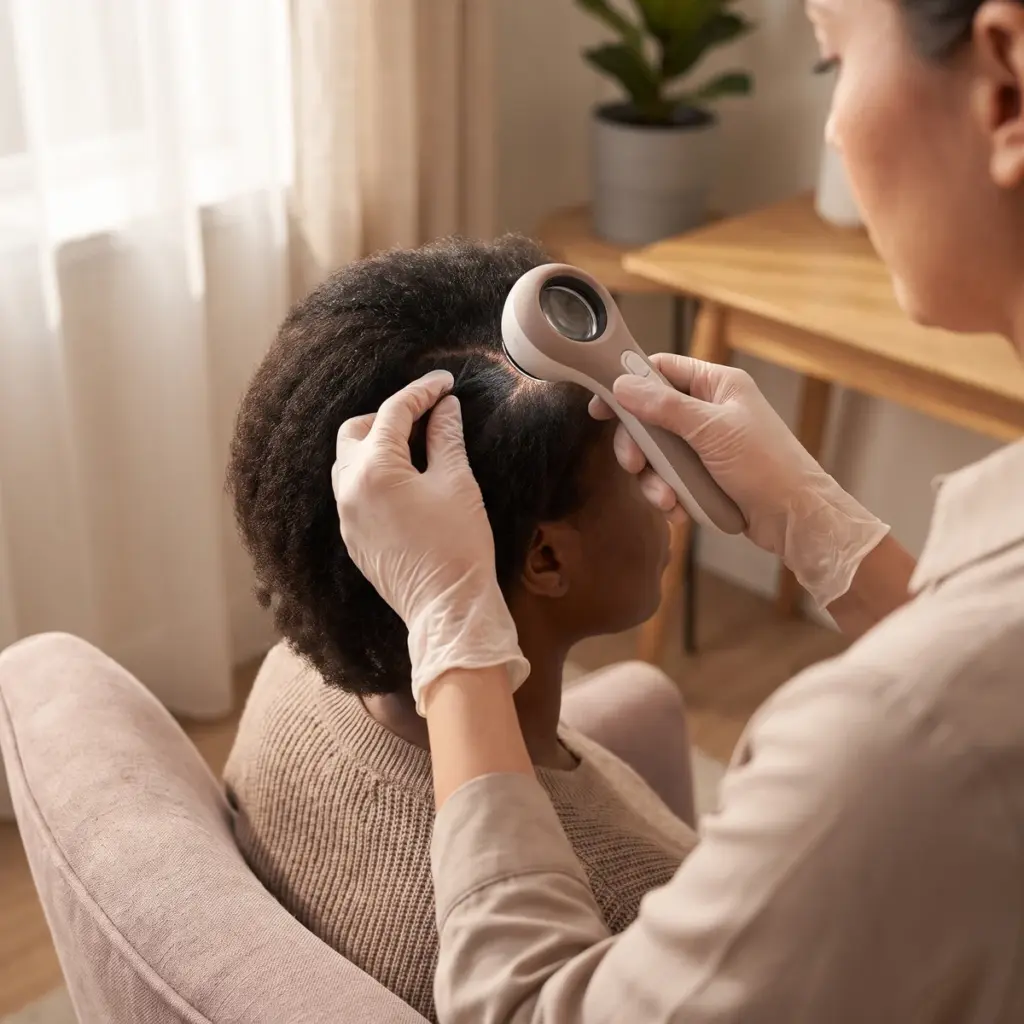
- Trichoscopy images of the scalp surface
Microbiome sampling
Where the product targets the scalp ecosystem, swabs taken at each visit are sequenced to follow the balance of Malassezia, Cutibacterium and Staphylococcus populations over the use period. The lab reports relative abundance and diversity at each visit against baseline.
Study output
You receive a report with baseline and follow-up values for each endpoint, the change at each time point with statistical testing, tolerance observations by the investigator, questionnaire results and standardised scalp photographs.
Planning Scalp Care Efficacy Testing for a product launch
Scalp studies take longer to recruit than most hair tests, so book them as soon as the formula is stable.
Picking endpoints for your positioning
An anti-dandruff shampoo is judged on graded flakes, ideally backed by disc counts. An oil-balancing shampoo needs sebum readings at fixed hours after washing, and the same measurement logic used in sebum control testing for facial skin applies here. Soothing serums rely on itch and comfort scores together with redness, and pre-wash masks for a dry scalp on corneometry and water loss. When the range also claims softer or stronger lengths, a combined protocol with hair product performance testing covers both in one panel.
Decisions to make before you brief the lab
Decide whether the comparator is a placebo shampoo, your current product or no treatment. Fix the use pattern (washes per week, leave-on time) to match the label instructions. Choose the time points that match your claim, such as after the first wash and after several weeks. If the shampoo will be sold in several markets, tell the lab early, because anti-dandruff positioning is regulated differently from one region to another.
Signs of an experienced scalp lab
Ask how graders are trained and checked for agreement, how hair is parted for instrument readings, and whether the lab can recruit enough people with visible flaking within your timeline.
More in Hair Scalp Testing
Hair product performance and scalp efficacy testing measures shine, strength, combability and scalp condition, with lab work on follicles and fibre.