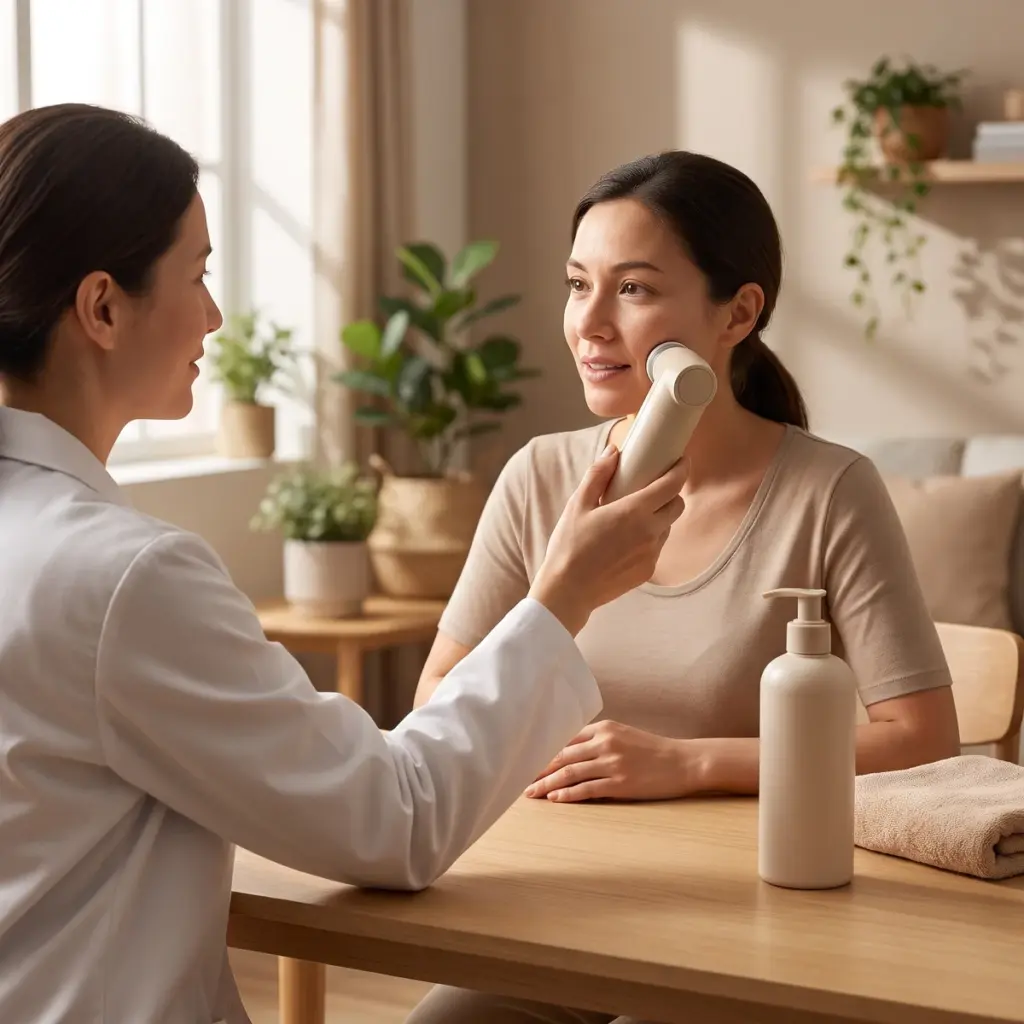
Skin Soothing & Comfort Efficacy Testing overview
Do you provide Skin Soothing & Comfort Efficacy Testing?
How soothing and comfort efficacy studies measure redness and sensation
Soothing studies track two kinds of outcome on volunteers. Visible signs, mainly redness and irritation, are scored by an assessor and measured with instruments. Perceived comfort is captured by asking participants what they feel. A well-built protocol records both and reports them separately.
Challenge models and in-use designs
In a challenge design, a small test area is mildly irritated under controlled conditions, often with a sodium lauryl sulfate patch, or redness is induced with a methyl nicotinate application. Treated and untreated sites are then compared as the skin returns to normal. A stinging test with lactic acid on the nasolabial fold is used to recruit people who report stinging or to measure how a product reduces that sensation. In-use studies follow a panel with reactive skin through days or weeks of normal application. Every challenge procedure is reviewed for safety before enrolment.
Endpoints and instruments
- Clinical redness and irritation scores by a dermatologist
- Chromameter a* value for skin redness
- Erythema index from a reflectance probe
- Transepidermal water loss after challenge
- Participant ratings of stinging, burning, itching and tightness
Optional biological readouts
Some protocols add tape strips or swabs to measure inflammatory mediators such as IL-1α on the skin surface, linking the clinical change to its biology.
Redness scores and statistics per claim tested
The report gives the protocol, panel profile, timepoints, individual and mean scores, change versus the control site and statistical significance, with a conclusion for each claim tested.
Building soothing and comfort claims from a skin soothing study
Soothing claims cover both what an assessor sees and what the user feels, so the design follows the wording.
Choosing the right design for your claim
‘Visibly reduces redness’ rests on chromametry and clinical scoring. A claim that names how quickly skin is soothed needs a challenge study with a reading at that exact time. ‘Suitable for sensitive skin’ or ‘skin feels more comfortable’ draws on an in-use study in a panel recruited for reactive skin, with questionnaires. Decide which claims matter before the quote, because each changes the panel, the timepoints and the cost.
Formula, skin profile and markets to share
Give the laboratory the finished formula, its use instructions, the target skin profile and the markets where the claims will run. Tell them whether you want a vehicle or untreated comparison. If you plan an ingredient claim too, share any mechanism data, so the protocol can include a matching surface marker.
Connecting to mechanism research
Ingredient suppliers often pair a volunteer study with laboratory work from inflammation & skin immunity testing, for example cytokine or TRPV1 assays. For reactive skin positioning, sensitive skin and skin comfort efficacy testing covers the neurogenic side in more depth.
More in Skin Comfort Testing
Skin soothing, comfort and redness efficacy testing measures visible redness and felt discomfort on volunteers, and inflammatory markers in skin models.

